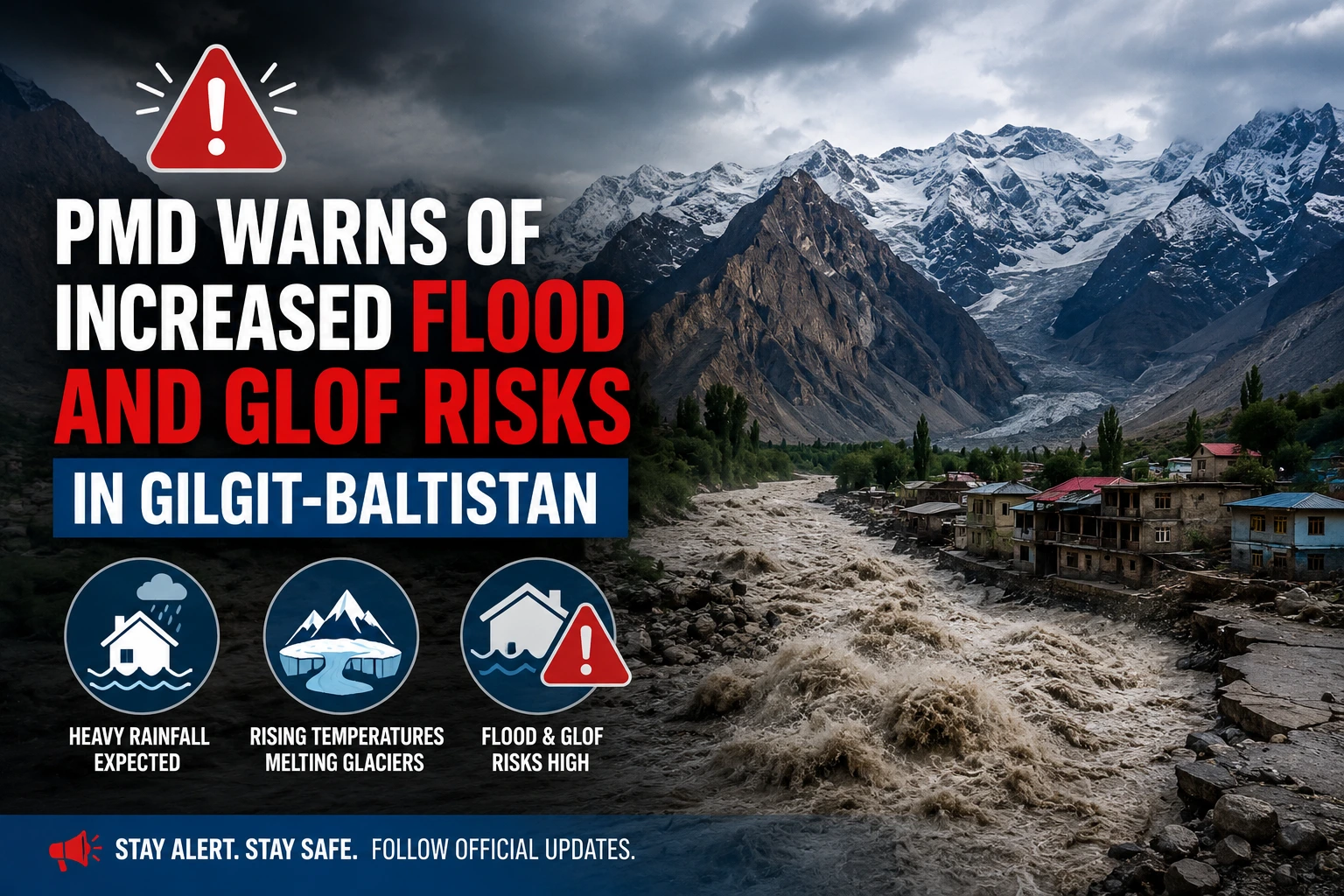
PMD Warns of Increased Flood and GLOF Risks in Gilgit-Baltistan
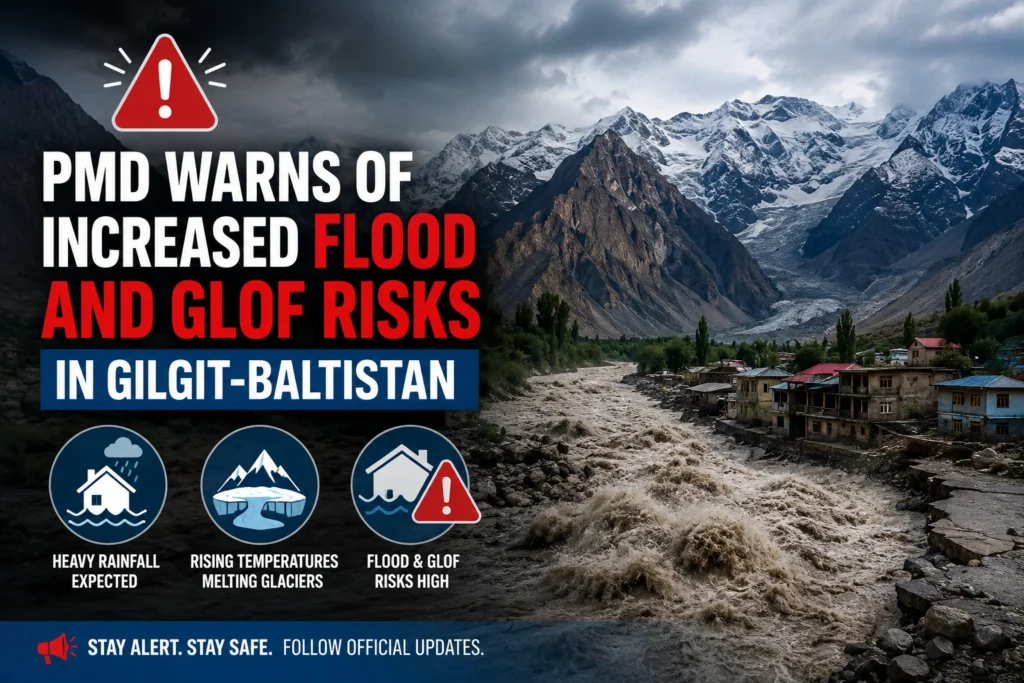
Gilgit-Baltistan, often called the land of mountains and glaciers, is once again facing growing concerns over floods and Glacial Lake Outburst Floods (GLOFs). The Pakistan Meteorological Department (PMD) has recently issued warnings about an increased risk of flooding and glacier-related disasters across several parts of the region. Rising temperatures, accelerated glacier melt, and expected rainfall have created conditions that could trigger dangerous flood events in vulnerable valleys. According to recent PMD and disaster management advisories, a combination of heatwave conditions and incoming weather systems has significantly raised the chances of flash floods and GLOF incidents in Gilgit-Baltistan and nearby northern regions.
For the people of Gilgit-Baltistan, this warning is more than just a weather forecast. It is a reminder of how closely daily life is connected to the mountains, rivers, and glaciers that surround them. Roads, bridges, farms, homes, and even entire communities can be affected within hours when a glacial lake bursts or a flash flood strikes. Understanding the risks and preparing in advance can help reduce damage and save lives during the coming months.
Understanding the Latest PMD Warning
The Pakistan Meteorological Department has highlighted that above-normal temperatures and continued glacier melt are increasing the possibility of GLOF events and flash floods. Recent alerts indicate that heatwave conditions followed by rainfall can create a dangerous combination in glaciated valleys. When high temperatures rapidly melt snow and ice, large amounts of water accumulate in glacial lakes. If heavy rainfall follows, these lakes may overflow or burst, sending massive amounts of water, mud, and debris downstream.
Authorities have urged local administrations, disaster management agencies, and communities to remain vigilant. Several vulnerable valleys across Gilgit-Baltistan have been placed under close monitoring due to the heightened risk. Experts warn that weather patterns are becoming increasingly unpredictable, making it essential to stay informed through official forecasts and emergency advisories.
Why Authorities Are Concerned
The concern is based on a combination of environmental and weather-related factors. Recent reports show that temperatures in northern Pakistan have remained above normal, causing glaciers to melt faster than usual. At the same time, seasonal weather systems are expected to bring rainfall and thunderstorms to upper regions of the country. This combination dramatically increases the likelihood of flood-related emergencies.
Current Weather Conditions in Northern Pakistan
Weather experts have observed unusual warming trends in many glaciated regions. The PMD has repeatedly warned that higher temperatures and periodic rainfall could trigger flash floods, landslides, and GLOF events in vulnerable mountain valleys. These changing weather patterns are being closely monitored because even a short period of intense rainfall can transform a manageable situation into a major disaster.
What is a Glacial Lake Outburst Flood (GLOF)?
A Glacial Lake Outburst Flood, commonly known as a GLOF, occurs when water stored in a glacial lake is suddenly released due to the failure of natural barriers made of ice, rock, or moraine. Imagine a dam holding back millions of liters of water. If that dam suddenly breaks, the water rushes downstream with tremendous force. A GLOF works in a similar way but often happens with little warning.
The floodwaters can travel rapidly through valleys, carrying rocks, mud, and debris. Roads can be washed away, bridges can collapse, and agricultural land can be buried under sediment. Because many communities in Gilgit-Baltistan are located along riverbanks and mountain valleys, they are particularly vulnerable to these sudden events.
How GLOFs Occur
Glacial lakes form when melting glaciers create pools of water trapped behind natural barriers. Rising temperatures increase the amount of meltwater entering these lakes. Heavy rainfall, landslides, earthquakes, or ice avalanches can weaken the barriers holding the water back. Once the barrier fails, a powerful flood is released downstream.
Why Gilgit-Baltistan is Highly Vulnerable
Gilgit-Baltistan contains one of the highest concentrations of glaciers outside the polar regions. Thousands of glaciers feed rivers and streams throughout the region. While these glaciers are essential for water resources, they also create numerous glacial lakes that can become unstable during periods of intense melting and extreme weather.
Rising Temperatures and Glacier Melt
Temperature increases are playing a major role in the growing flood threat. Scientists and meteorologists have observed warmer-than-normal conditions across many northern regions of Pakistan. These elevated temperatures are causing glaciers to melt earlier and faster than expected. As more ice melts, water levels in glacial lakes rise, increasing pressure on natural barriers.
The issue becomes even more serious when rainfall enters the equation. Rain falling on snow and ice accelerates melting while also adding more water to rivers and lakes. The result is a chain reaction that can lead to flash floods, landslides, and GLOF incidents. Communities downstream often have very little time to react once such an event begins.
Impact of Heatwaves on Glaciers
Heatwaves are no longer limited to lowland areas. Recent forecasts indicate that warmer conditions are extending into mountainous regions, affecting glacier stability. Increased temperatures accelerate snowmelt and contribute to the formation and expansion of glacial lakes.
Connection Between Snowmelt and Flooding
Snow acts like a natural water reservoir. When temperatures rise gradually, the water is released slowly. When melting occurs rapidly due to heatwaves, huge volumes of water enter rivers and lakes in a short period. This sudden increase can overwhelm waterways and contribute to flooding.
Areas Most at Risk in Gilgit-Baltistan
Several districts and valleys in Gilgit-Baltistan have been identified as highly vulnerable to flood and GLOF hazards. These include Hunza, Nagar, Ghizer, Diamer, Ghanche, Shigar, and Astore. Recent advisories have specifically mentioned glaciated valleys where monitoring efforts have been intensified.
The geography of these areas makes them particularly susceptible. Narrow valleys can channel floodwaters at high speed, increasing their destructive potential. Communities located near rivers and streams often face the greatest risk during extreme weather events.
| Region | Main Risk |
|---|---|
| Hunza | GLOFs, flash floods, landslides |
| Nagar | Glacier melt flooding |
| Ghizer | River flooding and GLOFs |
| Shigar | Flash floods and debris flows |
| Ghanche | Glacier-related hazards |
| Astore | Landslides and flooding |
Hunza and Nagar Regions
Hunza and Nagar are among the most closely monitored districts due to the presence of large glaciers and glacial lakes. Seasonal temperature increases can rapidly change conditions in these valleys, making early warning systems extremely important.
Ghizer, Shigar, Ghanche and Astore
These districts have experienced flood-related challenges in the past. Their mountainous terrain and dependence on glacier-fed rivers make them vulnerable whenever unusual weather patterns occur.
Potential Impact on Communities
Floods and GLOFs affect much more than infrastructure. They can disrupt entire ways of life. Roads connecting remote communities may become blocked, preventing access to healthcare, education, and markets. Power lines and communication networks can also be damaged, leaving communities isolated during emergencies.
Agriculture is another major concern. Many families in Gilgit-Baltistan depend on farming and livestock for their livelihoods. Floodwaters can destroy crops, erode fertile land, and kill livestock. Recovery often takes months or even years, placing additional economic pressure on affected households.
Threats to Homes and Infrastructure
Bridges, roads, schools, and public facilities are particularly vulnerable to flood damage. When transportation routes are disrupted, emergency response efforts become more difficult, increasing the impact of disasters.
Risks to Agriculture and Livelihoods
Floods can wash away irrigation channels and damage orchards, fields, and grazing lands. Since agriculture plays a central role in many local economies, these losses can have long-lasting consequences.
Government Preparedness and Response Measures
Government agencies have intensified monitoring and preparedness efforts across vulnerable regions. The PMD, NDMA, and provincial disaster management authorities are working together to improve forecasting, issue timely alerts, and coordinate emergency responses. Communities are being encouraged to develop contingency plans and remain alert during periods of severe weather.
Technology is also playing a growing role. Weather monitoring systems, satellite observations, and community-based warning networks help authorities track changing conditions and communicate risks to local populations. While these systems cannot eliminate hazards, they significantly improve preparedness and response capabilities.
Role of PMD and NDMA
The PMD provides weather forecasts and hazard warnings, while the NDMA coordinates disaster preparedness and response efforts. Their collaboration is critical for protecting communities during high-risk periods.
Early Warning Systems and Emergency Planning
Early warning systems allow communities to receive alerts before disasters occur. These warnings provide valuable time for evacuations and other protective measures.
Safety Measures for Residents
Residents living in vulnerable areas should remain informed through official weather updates and local administration announcements. During periods of heavy rainfall or rapid glacier melt, it is important to avoid riverbanks, streams, and flood-prone areas. Families should identify safe evacuation routes and keep emergency supplies readily available.
Preparation does not require expensive equipment. Simple actions such as storing essential documents safely, preparing emergency kits, and discussing evacuation plans with family members can make a significant difference. Communities that work together and share information are often better equipped to handle emergencies.
What Communities Should Do
- Follow official weather advisories.
- Avoid unnecessary travel during severe weather.
- Stay away from swollen rivers and streams.
- Report unusual water levels or landslides to authorities.
- Assist vulnerable neighbors during emergencies.
Emergency Preparedness Tips
Creating a family emergency plan and maintaining communication with local authorities can improve safety during flood events. Preparedness is one of the most effective tools available to communities facing natural hazards.
Climate Change and the Growing GLOF Threat
Climate change is increasingly recognized as a major factor behind rising glacier-related risks. Warmer temperatures are altering weather patterns, increasing glacier melt, and contributing to the formation of unstable glacial lakes. Experts believe that the frequency and intensity of extreme weather events may continue to increase if global temperatures keep rising.
For Gilgit-Baltistan, the implications are significant. The region’s glaciers serve as vital water sources for millions of people downstream. Changes in glacier behavior affect not only local communities but also broader water security across Pakistan. Addressing climate-related challenges will require both local adaptation measures and broader environmental action.
The Importance of Public Awareness
Public awareness remains one of the strongest defenses against natural disasters. People who understand the risks are more likely to take precautions and respond appropriately during emergencies. Educational campaigns, community training programs, and regular weather updates can help build resilience across vulnerable regions.
Awareness also encourages collaboration between residents, local governments, and disaster management agencies. When information flows quickly and accurately, communities are better prepared to protect lives and property. In a region where mountains shape daily life, staying informed can be just as important as any physical infrastructure.
Conclusion
The latest PMD warning serves as an important reminder that flood and GLOF risks in Gilgit-Baltistan remain a serious concern. Rising temperatures, accelerated glacier melt, and expected rainfall have created conditions that could lead to dangerous flooding in several vulnerable valleys. Authorities are strengthening monitoring and preparedness efforts, but community awareness and readiness remain equally important.
Gilgit-Baltistan’s breathtaking mountains and glaciers are a source of beauty, water, and livelihood. At the same time, they can pose significant risks when weather conditions change rapidly. By staying informed, following official advisories, and preparing in advance, communities can reduce the impact of floods and GLOF events while protecting lives and livelihoods for the future.
1. What does GLOF stand for?
GLOF stands for Glacial Lake Outburst Flood, a sudden release of water from a glacial lake due to the failure of its natural barrier.
2. Why has PMD issued a warning for Gilgit-Baltistan?
PMD has warned that rising temperatures, rapid glacier melt, and expected rainfall could increase the risk of floods and GLOF incidents.
3. Which areas are most vulnerable?
Hunza, Nagar, Ghizer, Shigar, Ghanche, Diamer, and Astore are among the areas considered vulnerable to glacier-related hazards and flooding.
4. How can residents stay safe during flood alerts?
Residents should monitor official weather updates, avoid flood-prone areas, prepare emergency kits, and follow evacuation instructions from local authorities.
5. Is climate change contributing to the increase in GLOF events?
Yes. Rising temperatures linked to climate change are accelerating glacier melt and increasing the formation of unstable glacial lakes, which can lead to more frequent GLOF events.