Gilgit-Baltistan Tourism Recovery Recovery Across Gilgit-Baltistan Despite Regional Turbulence
Gilgit-Baltistan tourism recovery the industry is showing clear signs of recovery in 2026, — but the rebound is uneven, and it follows one of the worst seasons the sector has ever recorded. Hoteliers, tourism officials and industry associations describe a cautious upswing in general and domestic tourism this year, even as high-altitude mountaineering, once the region’s marquee draw, continues to struggle to regain the ground it lost in 2025.
A Season of Rebound for the North
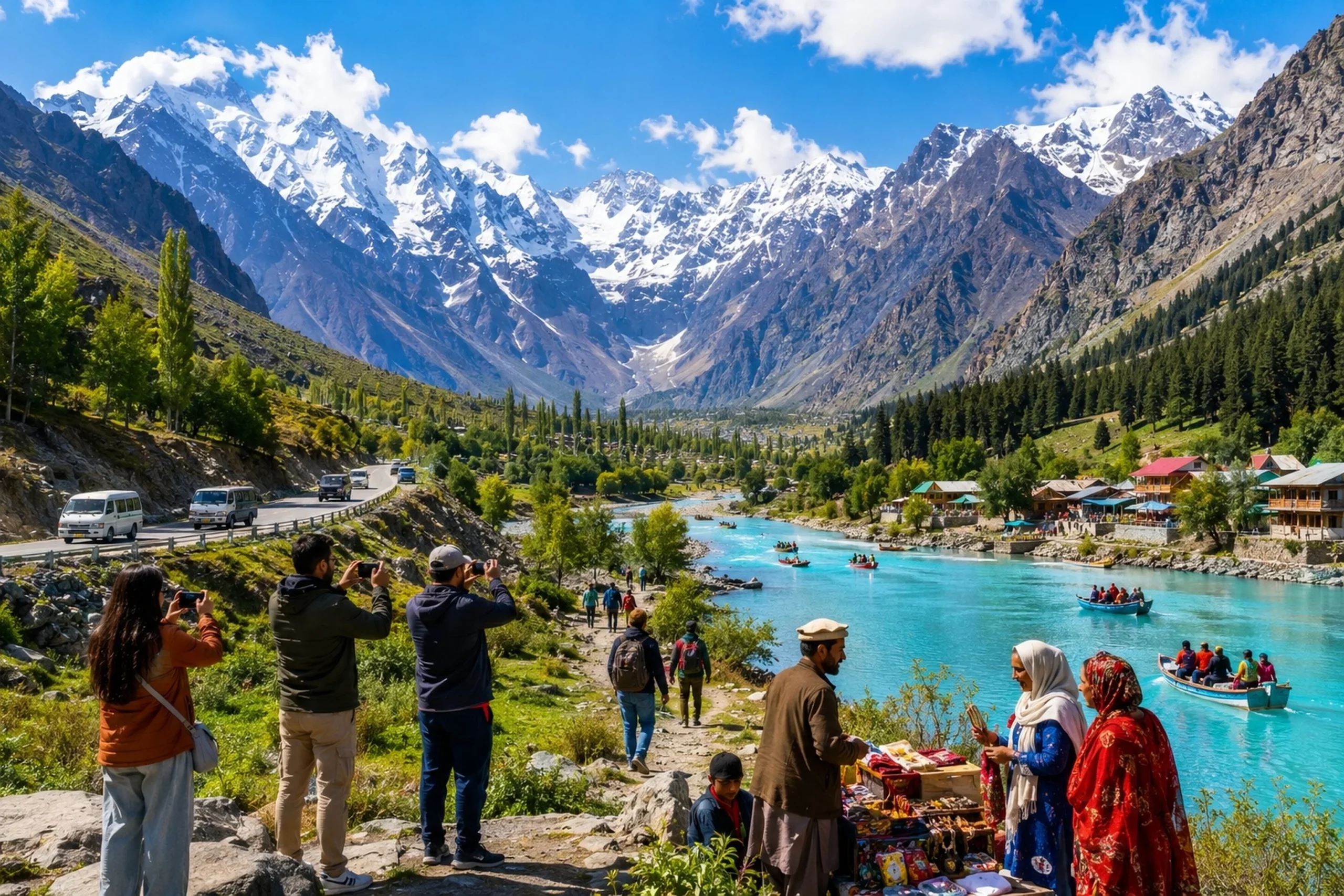
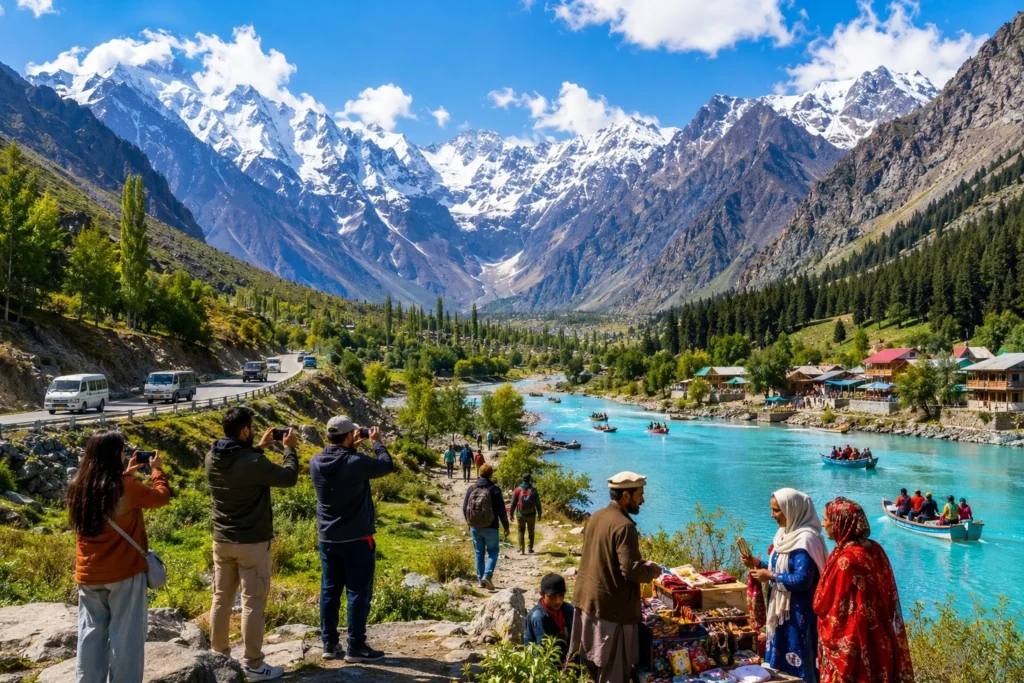
Gilgit-Baltistan’s tourism industry is showing clear signs of recovery in 2026, with hoteliers, tour operators and government officials reporting rising visitor numbers even as the region navigates regional tensions, monsoon flooding, and lingering security concerns from last year’s unrest. Officials say adventure tourism applications, hotel bookings and domestic footfall are all trending upward compared to the same period last year — a welcome turnaround for a sector that forms one of the territory’s most important economic lifelines.
Permits and Bookings Point to Growth
Officials from the GB tourism department reported that applications from foreign adventure tourists for climbing and trekking permits had already surpassed the previous year’s figures by spring 2026. Sajid Hussain, an assistant director at the department, said more than 1,000 permit applications had been received by March, compared with 850 by the same point the previous year, and expressed optimism that arrivals would keep climbing if conditions remained stable. DawnDawn
Skardu Deputy Commissioner Hamza Murad and Skardu hotelier Zulfiqar Shigri both confirmed a noticeably higher volume of tourist activity this year, with hotel reservations from domestic and foreign visitors outpacing last year’s numbers. Flight operations from Islamabad, Lahore and Karachi to Skardu were running smoothly, and the Karakoram Highway remained in good condition, easing access for travellers arriving by air and road. DawnDawn
The rebound is notable given the headwinds the sector faced. Industry figures such as Nazimullah Baig of Discovery Pakistan had warned that the escalating Middle East war and a resulting fuel price hike could dent this year’s season, and several countries, including the UK, had issued travel advisories against visiting Gilgit-Baltistan. That caution followed a turbulent 2025, when climate-related disasters and tension along the Pakistan-India border sharply reduced arrivals, and unrest in Gilgit and Skardu — triggered by regional developments — led to more than 20 deaths during clashes with law enforcement. DawnDawn
Building on a Strong 2024
The current recovery follows a strong 2024 season. That summer, the region drew around 2,200 foreign adventure tourists, 24,000 foreign tourists who did not require permits, and nearly one million domestic visitors. Separately, GB tourism officials had recorded 2,100 foreign climbing and trekking permit holders in 2023, rising to 2,380 in 2024, drawn to peaks including K2, Nanga Parbat, Gasherbrum-I, Gasherbrum-II and Broad Peak. International recognition has followed the numbers: CNN Travel included Gilgit-Baltistan in its “must-visit” destinations list, praising the region’s concentration of the world’s highest peaks, including K2. Dawn + 2
Cultural tourism is also having a moment. The Gilgit-Baltistan team ended a 12-year wait to win the Shandur Polo Festival title in 2026, a result the GB Tourism, Sports and Culture Department publicly celebrated as a boost to the region’s profile as a cultural and sporting destination, alongside its natural attractions.
Government Pushes for Easier Access
Policymakers are moving to build on the momentum. On July 7, GB officials proposed visa-free entry for Chinese nationals — mirroring an existing arrangement that lets GB residents travel into China’s Xinjiang region — as part of a broader push to grow tourist arrivals and business activity. The proposal was presented during a development briefing in Islamabad attended by PPP Chairman Bilawal Bhutto Zardari, newly elected GB Chief Minister Amjad Hussain, and former GB governor Qamar Zaman Kaira, with officials arguing that easier entry for Chinese visitors could meaningfully expand arrivals.
Challenges That Could Test the Recovery
The recovery is not without risk. Monsoon rains have brought flash floods, cloudbursts and landslides to parts of the region in recent weeks, including a cloudburst in Thore Valley, prompting the GB Tourism Department to issue advisories urging travellers to check road conditions with the Pakistan Meteorological Department, the National Highway Authority and local administration before setting out, and to avoid travel during active rainfall. Deputy Director of Tourism Safi Ullah has said that despite the disruption, the period is still considered a good time to visit given a projected clear weather window, with local clearance teams typically reopening blocked routes within 24 to 48 hours. Even so, the disruptions have coincided with public frustration over local taxation and subsidy issues, adding a layer of uncertainty for an industry that depends heavily on traveller confidence.
Why It Matters
Tourism is one of Gilgit-Baltistan’s most direct routes to economic opportunity, supporting hotels, transport operators, guides, porters and small businesses across districts with few other major industries. A steady recovery means real income for families in Skardu, Hunza, Gilgit and beyond; a stalled one risks reversing gains made since the sector’s post-pandemic rebuild. The coming peak summer season, running through August, will be the clearest test yet of whether this year’s early momentum holds.
A Cautiously Optimistic Outlook
Taken together, the data and on-the-ground accounts point to a genuine, if still fragile, recovery. Permit applications are up, hotels are filling, flights and roads are functioning, and the government is actively courting new visitor markets. But climate volatility, regional security dynamics and local political tensions remain real variables. For now, officials and industry figures alike describe the mood as cautiously optimistic — a season of recovery that will need to hold through the summer to count as a lasting turnaround.