
Protests Erupt Across Gilgit-Baltistan Over Prolonged Power Outages, Karakoram Highway Blocked
Gilgit-Baltistan Protests Intensify Over Power Outages
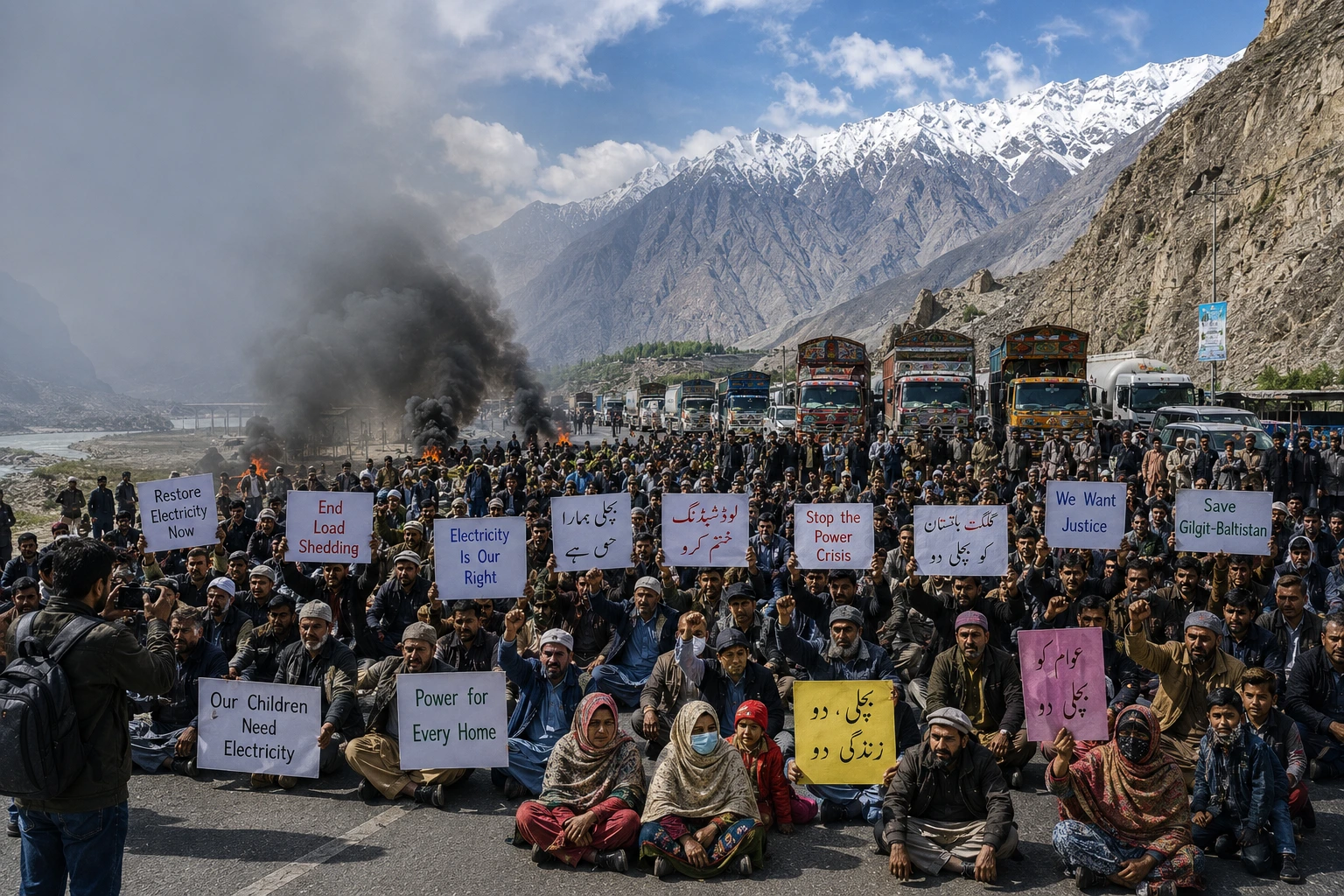
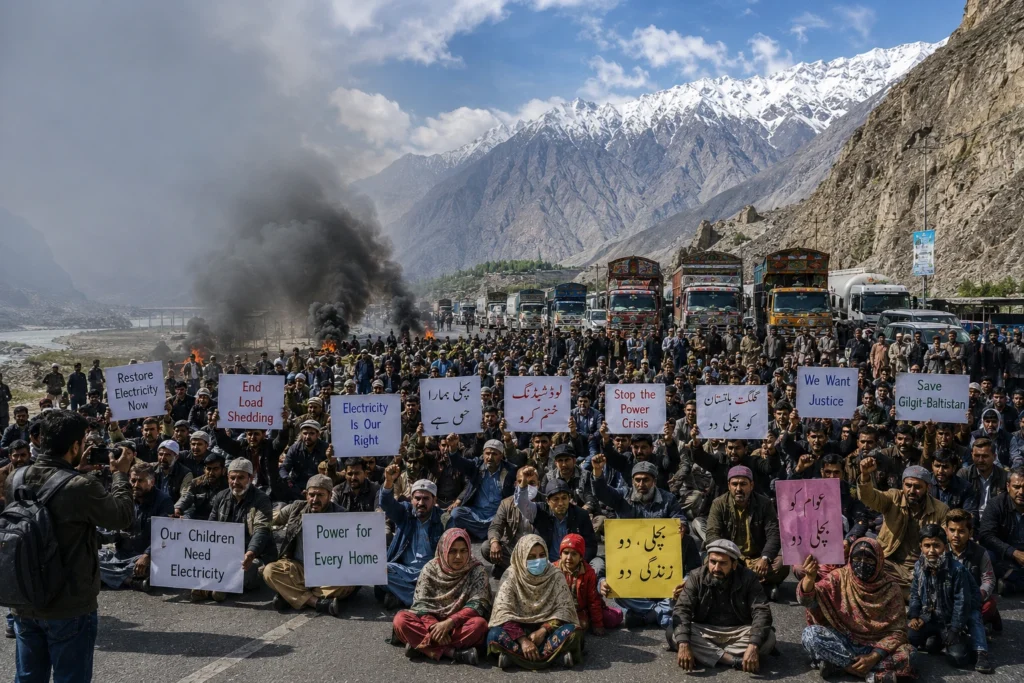
Gilgit-Baltistan power outage protests Residents across Gilgit-Baltistan staged fresh protests on Wednesday against prolonged and unannounced electricity outages, with demonstrators blocking parts of the Karakoram Highway to press authorities for an immediate solution to the region’s worsening power crisis. The demonstrations spread across several areas, disrupting traffic and drawing attention to a problem that has affected daily life for years.
Jutial Leads Widespread Demonstrations
The largest protest took place in Jutial, a densely populated area of Gilgit, where residents gathered on the Karakoram Highway carrying banners and chanting slogans against the government. Protesters said repeated complaints to the authorities had failed to improve electricity supply, leaving many households without power for long hours each day. Traffic remained suspended until negotiations were held with local officials.
Women Join Protests in Oshikhandass
Gilgit-Baltistan power outage protests Women also organized a separate demonstration in Oshikhandass, where they protested continuous and unscheduled load-shedding. Participants said the frequent outages had made daily household activities increasingly difficult during the summer heat. They warned that the protests would expand if authorities did not restore a reliable electricity supply.
Chilas Residents Demand Immediate Action
Another protest was reported in Chilas, where residents voiced similar concerns over prolonged electricity shortages. Demonstrators called on the government to speed up work on energy projects and provide immediate relief to communities experiencing lengthy blackouts.
Lengthy Load-Shedding Fuels Public Anger
Residents say the current crisis has become increasingly difficult to bear. According to protesters, many communities experienced up to 22 hours of daily load-shedding during the winter months. They argue that despite the arrival of summer, electricity shortages have continued, affecting homes, businesses, students, and healthcare facilities.
Karakoram Highway Blockade Disrupts Travel and Trade
The decision to block the Karakoram Highway reflected growing public frustration. The highway is Gilgit-Baltistan’s primary road connection with the rest of Pakistan and also serves as a major trade corridor linking Pakistan and China. Even temporary road closures can delay passenger travel, interrupt the movement of goods, and affect commercial activity across the region.
Travelers reported delays as vehicles lined up on both sides of the blocked sections of the highway. Local businesses also faced disruptions, while transporters expressed concern about the impact on supply chains if protests continue. Previous blockades of the Karakoram Highway have similarly affected cross-border trade and freight movement between Pakistan and China.
Protesters Call for Long-Term Energy Solutions
Protesters demanded immediate improvements in electricity generation and distribution rather than temporary measures. Many argued that the region possesses significant hydropower potential but continues to suffer from inadequate infrastructure, delayed projects, and insufficient investment. They urged both the Gilgit-Baltistan government and the federal authorities to prioritize long-term solutions.
Government Yet to Announce Immediate Relief
As of Wednesday, no detailed official announcement outlining immediate relief measures had been reported. However, the demonstrations have increased pressure on authorities to address one of the region’s most persistent public service challenges.
A Long-Running Electricity Crisis
Gilgit-Baltistan has faced recurring electricity shortages for several years. Unlike most parts of Pakistan, the mountainous region is not connected to the national electricity grid and relies mainly on local hydropower generation. During winter, reduced river flows significantly lower electricity production, resulting in extended outages. Residents and experts have repeatedly called for upgrades to existing power infrastructure and the completion of delayed energy projects.
Power shortages have triggered repeated public protests across Gilgit-Baltistan in recent years. Similar demonstrations during previous winters also led to road blockades and widespread demands for better electricity services. Citizens say repeated assurances have not resulted in lasting improvements, contributing to growing public frustration.
What Happens Next?
For now, residents say they will continue pressing their demands until authorities present a practical plan to improve electricity supply. Whether negotiations lead to immediate relief or further demonstrations will likely determine the next phase of the protests as communities across Gilgit-Baltistan continue to grapple with persistent power shortages.