
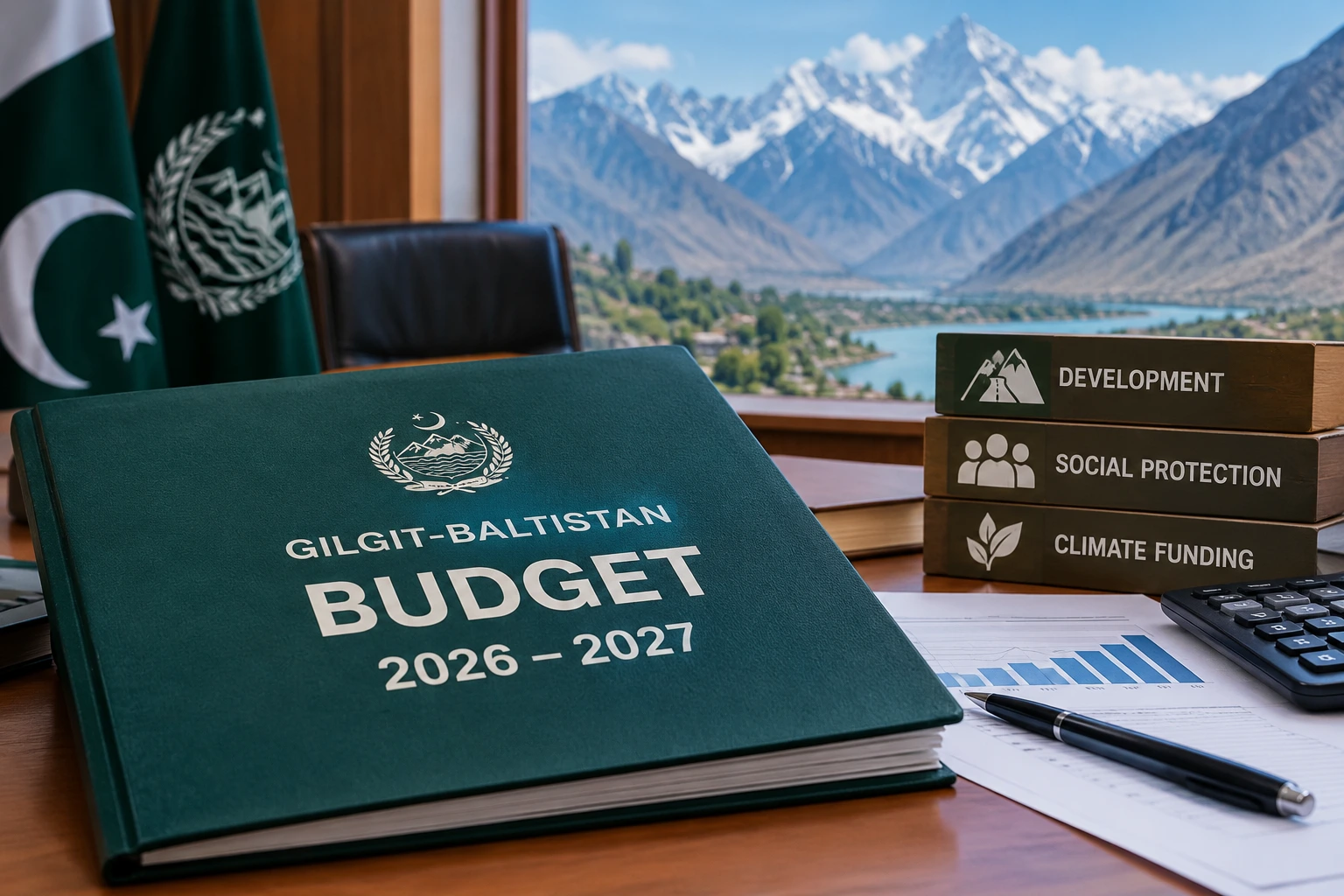
GB Cabinet Approves Rs 218 Billion Budget for FY 2026–27
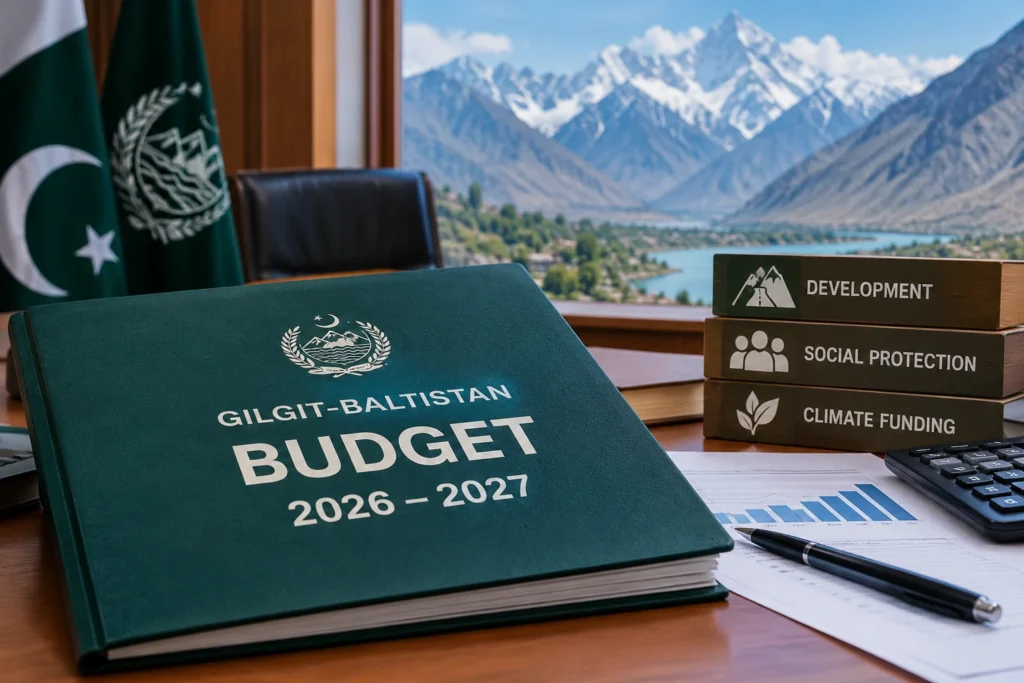
Rs 23 Billion Allocated for Development Projects
The Gilgit-Baltistan (GB) provincial cabinet has approved a Rs 218 billion budget for the financial year 2026–27, setting out the region’s spending priorities for the year ahead.
The approved budget allocates Rs 23 billion for development spending and Rs 28 billion for non-development expenditure. Meanwhile, the overall budget figure also includes the federal government’s stabilization package, which forms part of the financial support available to the region.
Budget Comes Amid Economic Pressures
The government approved the budget at a time when Gilgit-Baltistan faces growing economic challenges. Rising fuel prices have increased pressure on household and government spending, while the region continues to deal with a significant development throw-forward.
Against this backdrop, the new budget seeks to maintain government operations while also supporting development and social programmes. Moreover, the allocations reflect the government’s efforts to respond to some of the region’s emerging economic and environmental challenges.
Social Protection and Climate Funding Included
In addition to development allocations, the budget introduces new funding for social protection and climate-related initiatives.
These allocations come as communities across Gilgit-Baltistan face increasing exposure to climate-related risks, including floods, landslides, glacier-related hazards and other extreme weather events.
At the same time, the government has proposed changes concerning official government vehicles and development spending as part of its broader budgetary measures.
Implementation Will Determine the Impact
Although the cabinet has now approved the budget, the actual impact will depend largely on how effectively the government implements it during the financial year.
In particular, the pace of development spending, the completion of ongoing projects and the release and utilization of allocated funds will determine how much the budget translates into tangible benefits for communities.
Furthermore, the large development throw-forward remains a key challenge. The government will therefore need to balance new projects with the completion of existing schemes while managing limited financial resources.
As the new financial year progresses, actual spending, project implementation and progress on development schemes will provide a clearer picture of how the Rs 218 billion budget is being put into practice.