
Sohail Sakhi Laid to Rest in Hunza
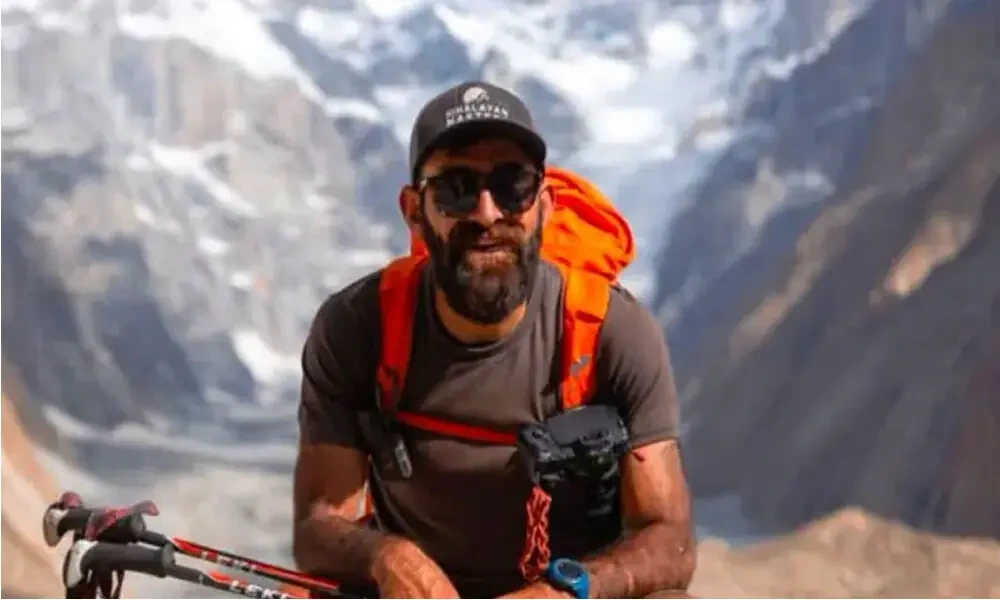
Aliabad, Hunza: Pakistani mountaineer Sohail Sakhi, who died in the July 30 avalanche on Broad Peak, was laid to rest in his ancestral graveyard in Aliabad, Hunza, on Sunday, bringing a painful chapter to a close for his family and Pakistan’s mountaineering community nearly two weeks after the tragedy.
Body Recovered After Two-Week Search
Sakhi, 30, was among ten climbers from a mixed international team of Pakistani, American, Nepali, Chinese and Omani mountaineers when a massive avalanche struck them between Camp 2 and Camp 3 on Broad Peak, the world’s 12th-highest mountain, on July 30. The expedition was led by renowned British-Nepali mountaineer Nirmal Purja. His company later confirmed there were no survivors.
In the days that followed, search teams recovered several bodies, but Sakhi remained missing as authorities suspended the search because of the risk of further avalanches. On August 13, local Shigar volunteers Muhammad Nadeem, Muhammad Bashir and Abuzar resumed the search on their own initiative and found his body. According to the Alpine Club of Pakistan (ACP), the volunteers located his remains at an altitude of about 5,600 metres near Camp 1 and helped carry them to Broad Peak Base Camp, where authorities formally identified him.
Pakistan Army helicopters airlifted Sakhi’s body from the base camp to Skardu on Saturday. Authorities then transported his body to Nasirabad and later to Aliabad on Sunday morning, bringing him home for his final rites.
Funeral Prayers and Burial
A procession of dozens of vehicles and motorcycles escorted Sakhi’s body into Hunza before mourners took it to Aliabad College Ground, where they offered his funeral prayers. A large crowd attended, including Gilgit-Baltistan’s Tourism and Culture Minister Naiknam Karim, along with district administration officials and representatives of the provincial government and various public organisations, who also laid floral wreaths at the funeral.
Speaking at the occasion, Minister Karim said, “We have gathered here to say goodbye to a brave mountaineer of the land.” He described Sakhi’s death as a loss for both Gilgit-Baltistan and Pakistan, adding that the climber “loved mountains” and had made a name for himself in a short span of time. Karim also offered condolences to the bereaved family. Officials additionally stated that the government would provide Rs 3 million to Sakhi’s family under an insurance policy.
Sakhi’s final resting place is his ancestral graveyard in Aliabad, where his family laid him to rest. According to local reporting, residents of Hunza bid farewell to the mountaineer with visible grief as the burial concluded.
Weeks earlier, while Sakhi’s body remained missing on the mountain, hundreds of mourners attended funeral prayers in absentia in Aliabad and gathered to offer condolences to his family as the search continued.
A Mathematician Who Chose the Mountains
Sakhi was born and raised in Aliabad, Hunza, a valley long associated with Pakistan’s mountaineering tradition. His father, Sakhi Karim, was a well-known local guide who had helped build up Hunza’s adventure tourism industry, but he died suddenly when Sakhi was still a teenager. His mother, Rubina Shaheen, subsequently took up work at a local school and ran a girls’ hostel from their home to support the family.
Sakhi went on to complete a master’s degree — reported as being in mathematics or physics — in Islamabad, but chose to return to Hunza and build a life in the mountains rather than pursue a conventional career. He started a hotel and tour business in Aliabad while working as a guide, and it was during this period that he took up serious mountaineering.
Over the course of his climbing career, Sakhi summited K2, Nanga Parbat, Gasherbrum I and Gasherbrum II — completing several of these ascents without supplemental oxygen or porter support — and, this past May, reached the summit of Kangchenjunga, the world’s third-highest peak, as the only Pakistani member of an international rope-fixing team. He was also a high-altitude photographer who documented Pakistan’s glaciers and northern peaks, and he worked to train young climbers from his community, co-founding an expedition and hospitality venture in Hunza.
Close friends and fellow climbers, including mountaineers Naila Kiani and Sirbaz Khan, have described him as a supportive and steady presence on difficult climbs. Broad Peak would have completed his ascent of all five of Pakistan’s 8,000-metre peaks; on this expedition, he was guiding American client Mallory Geis, who also died in the avalanche.
The Broad Peak Tragedy
The avalanche that killed Sakhi and nine other climbers ranks among the deadliest mountaineering accidents in Pakistan’s recent history.Trackers placed the group at around 6,600 metres shortly before the slope gave way, sweeping climbers hundreds of metres — in places over 1,500 vertical metres — down the mountain.
Recovery operations involving the Pakistan Army, local rescuers and volunteer climbers faced repeated delays because of poor weather, extreme altitude and the risk of further avalanches. Authorities have recovered eight of the ten victims and returned their bodies to their families. Nirmal Purja was among those recovered, with his body flown to Skardu on August 6. The search continues for the remaining two climbers, American Sarah Mallory Geis and Nepali guide Nawang Thindu Sherpa, though efforts remain difficult given the terrain and conditions.
Grief and Legacy
For Sakhi’s family, the weeks between the avalanche and the recovery of his body brought deep sorrow, uncertainty and continued hope. His uncle, Darwish Ali, earlier described the family’s experience as a painful period of waiting, prayers and uncertainty.” His mother reportedly travelled to Skardu alone upon first learning of the accident, before other relatives joined her there.
Sakhi’s burial closes a painful and prolonged wait for his family and for Hunza, a community deeply tied to mountaineering and one that has now lost one of its most accomplished sons. His death, alongside that of nine other climbers, has renewed attention on the extreme risks faced by high-altitude mountaineers and guides who work on Pakistan’s 8,000-metre peaks — often in support of international expeditions, and frequently with far less recognition than the climbers they guide.
As Hunza mourns, those who knew Sakhi remember him not only for his summits but for the manner in which he pursued them: without oxygen, without fanfare, and with a consistent commitment to the safety of those who climbed beside him.


[…] Alpine Club of Pakistan confirmed that the local women’s team reached the summit without the assistance […]