
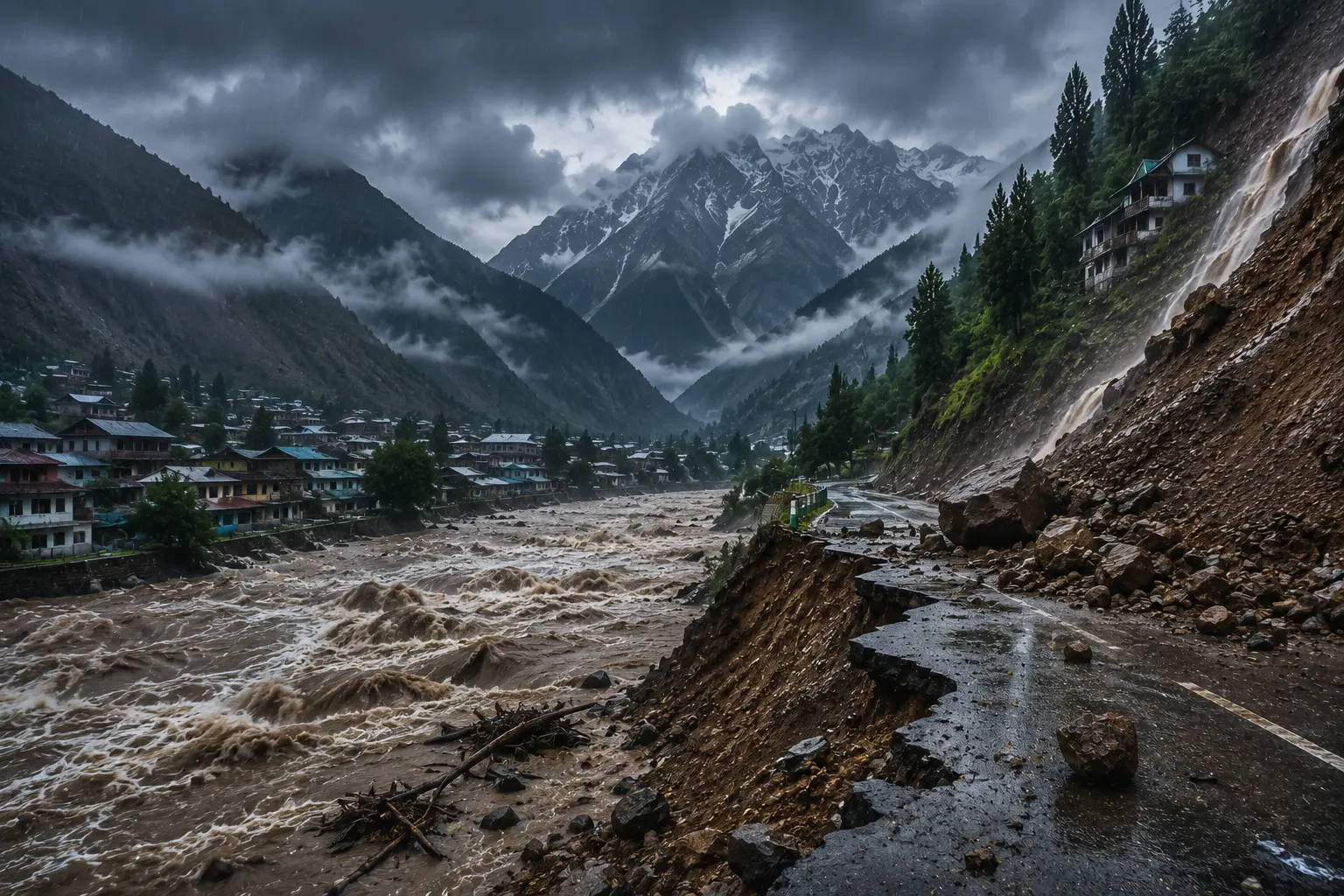
Heavy Monsoon Rains Trigger Floods in Gilgit-Baltistan
Heavy Monsoon Rains Trigger Floods and Landslides Across Gilgit-Baltistan
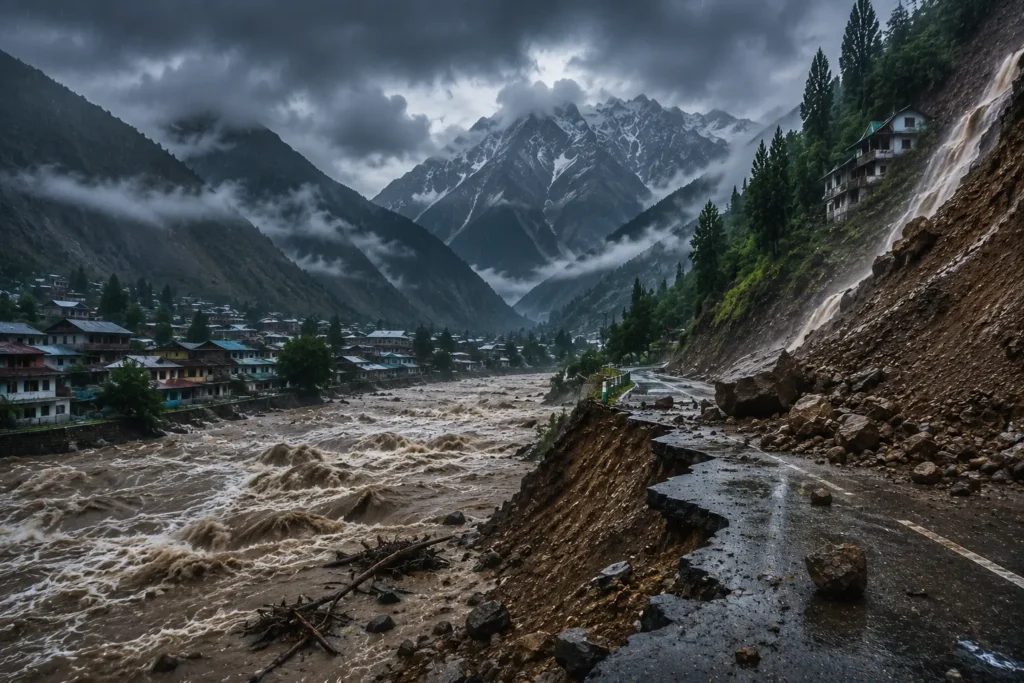
Heavy monsoon rains in Gilgit-Baltistan have put the region on high alert this week, as national and regional disaster authorities warn of flash floods, landslides, and rising river levels across several mountain districts. The Pakistan Meteorological Department (PMD) and the National Disaster Management Authority (NDMA) have issued advisories covering the period from July 21 to 24, 2026, urging residents and travelers in vulnerable valleys to remain cautious. The situation remains developing, and this article will be updated as verified information becomes available.
Heavy Monsoon Rains Hit Gilgit-Baltistan
The current spell follows weeks of monsoon activity across northern Pakistan. On July 11, the PMD warned that a fresh westerly weather system, combined with the monsoon current, was likely to bring heavy rain and thunderstorms to Gilgit-Baltistan and Khyber Pakhtunkhwa, raising the risk of glacial lake outburst floods (GLOFs) amid warmer temperatures accelerating glacier melt.
By July 21, the NDMA had escalated this into a nationwide flood and landslide alert, warning of flash floods in rivers, hill torrents, and seasonal streams across Gilgit-Baltistan, Khyber Pakhtunkhwa, Azad Jammu and Kashmir, Punjab, and northeastern Balochistan. A separate landslide, rockfall, and debris-flow alert was issued specifically for Chitral and Gilgit-Baltistan, effective from July 21 to July 23.
Ahead of this spell, NDMA Chairman Lieutenant General Inam Haider Malik visited the Gilgit-Baltistan Disaster Management Authority on July 19 to review district-wise readiness, early warning systems, and evacuation plans for flash floods, GLOFs, landslides, and riverine flooding in high-risk valleys.
Areas Most Affected
According to the NDMA, the Gilgit-Baltistan districts of Hunza, Shigar, and Ghanche are among those facing the highest risk of flash flooding. Rivers under watch include the Shimshal, Hunza, Chapursan, Kilik, Shigar, Shyok, and Hushe.
The landslide and rockfall alert lists a number of vulnerable routes across the region, including:
- Ultar–Shisper and Karimabad–Altit in Hunza
- Hopper Nagar
- Rama–Astore and Trishing–Rupal
- Upper Yasin
- Puriyan Sar and Shamsabad
- The Jaglot–Skardu Road between RD-20 and RD-80
As of July 20, humanitarian tracking sources reported that Gilgit-Baltistan remained under a high-risk designation because of glacier melt and road blockages, though no fatalities had been confirmed in the region up to that point. This is a marked contrast to Khyber Pakhtunkhwa, which has been the hardest-hit province so far this monsoon season.
Damage to Roads, Homes, Agriculture, and Infrastructure
Disaster tracking as of late July 2026 recorded 49 damaged houses and roughly 2.52 kilometres of damaged roads in Gilgit-Baltistan since the start of this year’s monsoon season. Nationally, the monsoon has damaged approximately 178 houses, with 77 destroyed and 101 partially damaged, along with the loss of around 179 head of livestock.
Mountain roads remain the most immediate concern in Gilgit-Baltistan. Landslides and debris flows on routes such as the Jaglot–Skardu Road and roads around Hunza, Nagar, and Astore can cut off communities and disrupt supply chains for days at a time. Given the terrain, even a short blockage can isolate villages that depend on a single access road.
It is worth noting that this year’s monsoon arrives while many households in Gilgit-Baltistan are still recovering from the far more severe 2025 flood season, when catastrophic flash floods prompted the regional government to declare emergencies across dozens of flood-hit areas and caused billions of rupees in damage. That reduced recovery capacity is one reason authorities are treating this year’s alerts with urgency, even though confirmed damage so far has been comparatively limited.
Emergency Response and Rescue Operations
The NDMA has directed provincial and district authorities, including the Gilgit-Baltistan Disaster Management Authority (GBDMA), to remain on high alert, deploy emergency response teams, and take preventive measures in vulnerable areas. Instructions issued alongside the July 21 alert called for continuous monitoring, standby emergency teams, and the swift reopening of any blocked roads.
During his preparedness visit, the NDMA chairman emphasized the timely implementation of contingency plans, prepositioning of relief stock, and strengthening community awareness in high-risk areas, according to state broadcaster Radio Pakistan. He also reiterated NDMA’s support for Gilgit-Baltistan in building resilience against hydro-meteorological hazards.
Humanitarian organizations, including Islamic Relief Pakistan, have said they continue to coordinate with the NDMA, water and sanitation agencies, and district disaster management authorities while monitoring the evolving situation, with emergency response teams on standby for deployment if conditions worsen.
Weather Forecast and Public Safety Advice
The PMD’s 2026 monsoon outlook for the Hindu Kush-Karakoram-Himalaya region forecasts near-normal monsoon rainfall for Gilgit-Baltistan and adjoining areas, but it also warns that above-normal temperatures are increasing the risk of floods, landslides, and glacial hazards. Glacier lake monitoring updates issued by the PMD in the same week point to elevated water levels in glaciated valleys.
The NDMA’s public safety guidance for the current alert period includes:
- Avoiding unnecessary travel to mountainous and high-risk areas during active alerts
- Staying away from riverbanks, nullahs, and known landslide-prone stretches, especially after heavy rainfall
- Monitoring official NDMA, PMD, and GBDMA advisories for real-time updates
- Keeping emergency contact numbers and essential supplies on hand in flood-prone communities
Because mountain weather in Gilgit-Baltistan can change rapidly, conditions on any single road or valley can shift within hours, and residents are advised to follow local administration instructions rather than relying solely on general forecasts.
Impact on Tourism and Local Economy
Gilgit-Baltistan’s tourism season typically peaks during the summer months, drawing domestic and international visitors to valleys such as Hunza, Skardu, and Astore. Road closures caused by landslides and flash floods during this period can strand travelers, delay trips, and disrupt the flow of tourism-linked income for local businesses, transporters, and guides.
The current travel advisory affecting routes like Rama–Astore and sections of the Jaglot–Skardu Road means visitors should plan for possible delays and confirm road status before departure. Beyond tourism, agriculture in the region, which relies on glacier-fed irrigation channels and seasonal access roads, is also vulnerable when flash floods damage water channels or cut off farming communities from markets.
Climate Change and Increasing Weather Extremes
Scientists and disaster management officials have repeatedly linked the intensity of recent monsoon seasons in northern Pakistan to broader climate change trends, particularly rising temperatures that accelerate glacier melt in the Karakoram and Himalayan ranges. The PMD’s own advisories this season have tied the elevated GLOF risk directly to the combination of heavy rainfall and above-normal temperatures.
Gilgit-Baltistan sits at the convergence of some of the world’s largest glacier systems outside the polar regions, making it especially sensitive to this pattern. The 2025 monsoon season, which brought catastrophic flooding to dozens of areas across the region, is widely cited by disaster planners as evidence that Gilgit-Baltistan’s infrastructure and early-warning systems need continued strengthening to keep pace with increasingly extreme weather events.
What Residents and Travelers Should Do
Residents and travelers in or planning to visit Gilgit-Baltistan during this monsoon spell should:
- Check official advisories from the NDMA, PMD, and GBDMA before traveling on mountain roads
- Avoid camping or parking near riverbanks and stream beds during active rain alerts
- Keep a charged phone and emergency contacts accessible in remote areas
- Report visible cracks, slope movement, or road damage to local authorities promptly
- Follow evacuation instructions immediately if issued by district administrations
Given how quickly conditions can change in mountain terrain, travelers should also build flexibility into their itineraries during the alert period.
Conclusion
Heavy monsoon rains in Gilgit-Baltistan have triggered flood and landslide alerts across several districts, with authorities warning of continued risk through at least July 24. While Gilgit-Baltistan has so far avoided the fatalities reported in Khyber Pakhtunkhwa this season, road damage, house damage, and the threat of glacier-related flooding remain active concerns. This is a developing situation, and residents and travelers should continue to monitor official channels for the latest verified updates.
Frequently Asked Questions