
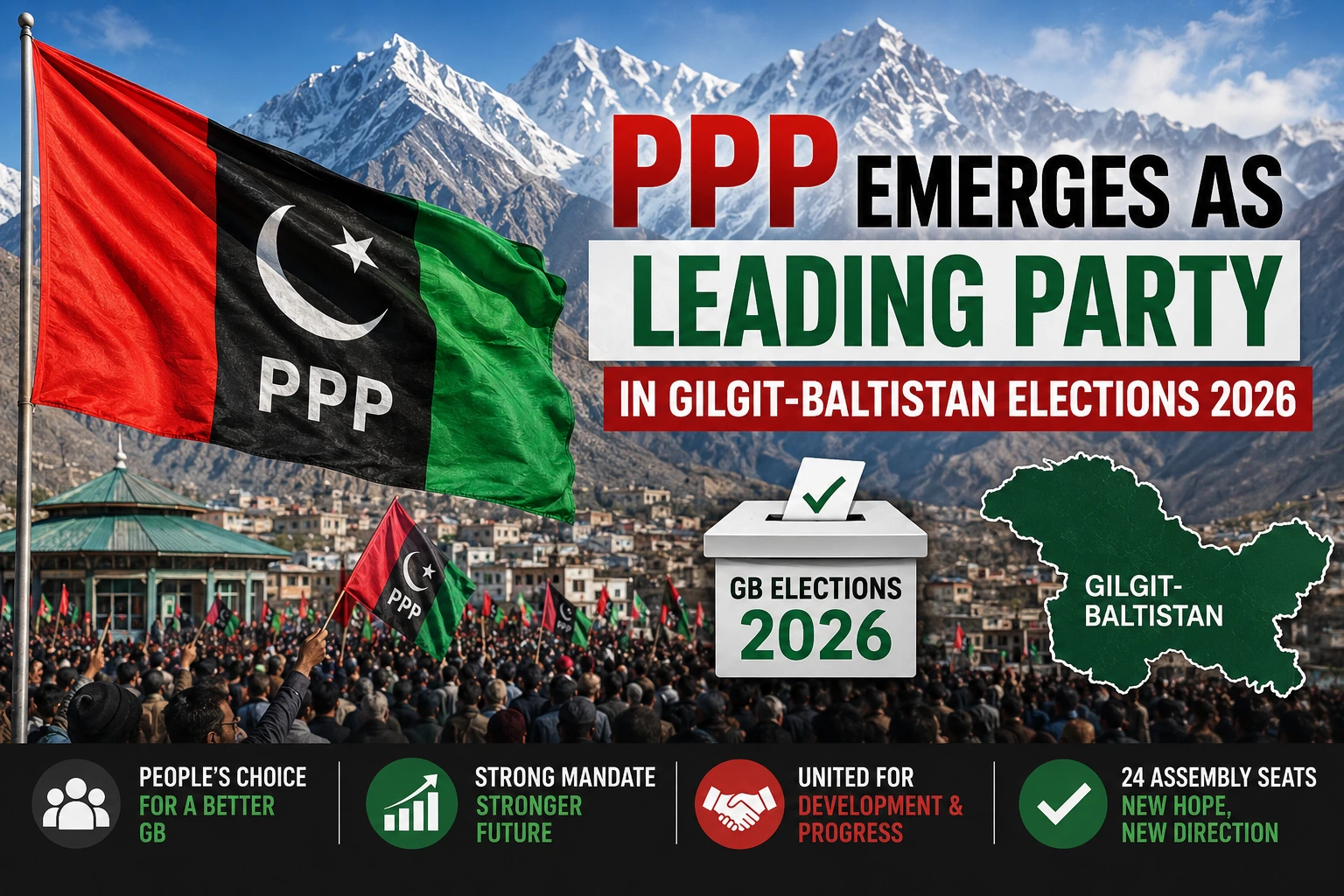
PPP Emerges as Leading Party in Gilgit-Baltistan Elections 2026: A Complete Analysis
Introduction
The Gilgit-Baltistan Elections 2026 have become one of the most important political events in northern Pakistan. The elections attracted significant public interest as voters across the region came out to elect representatives for the Gilgit-Baltistan Assembly.
According to unofficial and preliminary results, the Pakistan Peoples Party (PPP) emerged as the leading political party by winning the highest number of seats among all contesting parties. Although the party did not secure an outright majority, its strong performance placed it in a favorable position to lead negotiations for government formation.
The election was closely watched because Gilgit-Baltistan plays a strategic role in Pakistan’s economy, tourism sector, regional connectivity, and development planning. The outcome is expected to shape policies related to infrastructure, education, healthcare, tourism, and employment over the next five years.
Overview of the Gilgit-Baltistan Elections 2026
The Gilgit-Baltistan Legislative Assembly consists of 24 directly elected seats. Citizens from across Gilgit, Skardu, Diamer, Ghizer, Ghanche, Astore, Hunza, and Nagar participated in the electoral process.
Polling was conducted under security arrangements, and voting remained largely peaceful throughout the day. Election authorities established polling stations across urban and remote mountain communities to ensure broad participation.
The elections represented a major democratic exercise for the region, allowing residents to choose leaders who will address local challenges and development priorities.
Why the Elections Were Important
Several factors increased the significance of the 2026 elections:
Economic Development
Residents expected elected representatives to address unemployment, business opportunities, and economic growth.
Tourism Expansion
Gilgit-Baltistan continues to attract thousands of tourists every year. Many voters wanted stronger policies to improve tourism infrastructure.
Infrastructure Needs
Road networks, electricity projects, internet connectivity, and public services remained key election issues.
Youth Participation
A growing youth population actively participated in discussions about education, jobs, entrepreneurship, and digital opportunities.
Election Day Across Gilgit-Baltistan
Election day witnessed active participation from voters across the region. Polling stations opened early in the morning and remained operational throughout the day. Security personnel were deployed to maintain law and order.
Reports from different districts indicated strong voter turnout, especially among young voters and first-time participants. Social media platforms were filled with updates, photographs, and discussions about the voting process. The peaceful conduct of the elections was widely welcomed by political observers and community leaders.
PPP Emerges as Leading Party in Gilgit-Baltistan Elections 2026
One of the biggest stories to emerge from the elections was the strong performance of the Pakistan Peoples Party. Unofficial results indicated that PPP secured around 10 seats, making it the largest political party in the assembly. This result marked a significant improvement compared to previous electoral performances in the region.
PPP leadership celebrated the outcome and thanked voters for their trust and support. Party officials described the results as a sign of public confidence in their development agenda and political vision for Gilgit-Baltistan. Although the party fell short of an absolute majority, it emerged in the strongest position to build alliances and form the next government.
Seat Distribution and Preliminary Results
Based on preliminary reports, the political landscape appeared highly competitive.
| Party | Estimated Seats |
| PPP | 10 |
| Independents | 5–7 |
| PML-N | 4 |
| MWM | 1 |
| Others | Remaining seats |
The results showed that no single party secured enough seats to form a government independently, making coalition discussions essential.
Performance of Other Political Parties
Pakistan Muslim League-Nawaz (PML-N)
PML-N secured several seats but remained behind PPP in the final count. The party continued to maintain influence in certain constituencies across the region.
Independent Candidates
Independent candidates performed strongly and emerged as key players in determining the future government structure. Their support could prove decisive during coalition negotiations.
Other Parties
Several smaller parties and regional political groups also secured representation, ensuring a diverse assembly.
The Role of Independent Candidates
Independent candidates became one of the most important factors in the election outcome. Since no party achieved a clear majority, independent members gained significant political influence. Their decisions regarding alliances and coalition agreements could directly impact government formation.
Political analysts believe negotiations with independent lawmakers will play a crucial role in shaping the next administration.
Key Winning Constituencies
Several constituencies witnessed highly competitive contests.Candidates from PPP secured victories in important districts, helping the party establish a strong regional presence. Success in multiple constituencies reflected effective local campaigning and voter outreach efforts.
Many races were decided by relatively narrow margins, highlighting the competitive nature of the elections.
Public Response to the Election Results
Public reaction to the results was mixed but largely positive. PPP supporters celebrated victories in various districts, while supporters of other parties expressed determination to continue political engagement.
Across social media, discussions focused on development expectations, governance priorities, and coalition possibilities.
Citizens emphasized the importance of delivering practical solutions to local issues rather than political slogans alone.
Challenges and Allegations Raised After Voting
Like many elections, the Gilgit-Baltistan polls were not without controversy.
Some political leaders raised concerns regarding the election process and alleged irregularities. Certain parties questioned aspects of the results and called for further review.
Despite these concerns, election authorities continued the result consolidation process while maintaining that the elections had been conducted according to established procedures.
What Helped PPP Gain Public Support
Several factors may have contributed to PPP’s electoral success.
Strong Local Campaigning
PPP candidates maintained active engagement with communities throughout the campaign period.
Development Promises
The party focused heavily on infrastructure, public services, and economic opportunities.
Experienced Leadership
PPP benefited from its established political presence and recognizable leadership structure.
Voter Mobilization
The party effectively encouraged supporters to participate in the electoral process.
Impact on Future Governance
The election outcome is expected to influence policymaking across Gilgit-Baltistan.
The next government will face important responsibilities, including:
- Improving healthcare facilities
- Expanding educational opportunities
- Strengthening tourism infrastructure
- Creating employment opportunities
- Enhancing road and transport networks
- Supporting environmental protection initiatives
Citizens expect practical progress rather than political competition.
Economic and Development Expectations
Economic development remains a major priority for residents.
Many voters hope the new administration will:
- Attract investment
- Improve local businesses
- Support entrepreneurship
- Increase tourism revenue
- Create new employment opportunities
Given Gilgit-Baltistan’s strategic location, economic planning will likely remain a central focus of government policies.
Political Significance for Pakistan
The Gilgit-Baltistan elections carry importance beyond regional politics. National political parties view the region as strategically significant due to its location, tourism potential, and role in major development projects.
The election results also provide insight into changing political trends and voter preferences across northern Pakistan.
What Happens Next
Following the release of unofficial results, attention shifts toward government formation PPP is expected to engage in discussions with independent candidates and other political stakeholders to secure enough support for forming the next administration.
Coalition negotiations will likely determine leadership positions and future policy priorities.

[…] this seat, the PPP’s strength in the 33-member Gilgit-Baltistan Assembly has risen to 15 seats, up from its previous tally of 14. The current […]