Kharmang Clash Leaves Four Dead, Several Injured Over Pasture Row: Causes, Consequences, and the Way Forward
Note on figures: This piece uses the casualty toll confirmed by Dunya News as of July 17, 2026 — four dead, several injured. This is a developing story, the toll should be checked against official police/administration statements before final publication and updated if revised.
Introduction
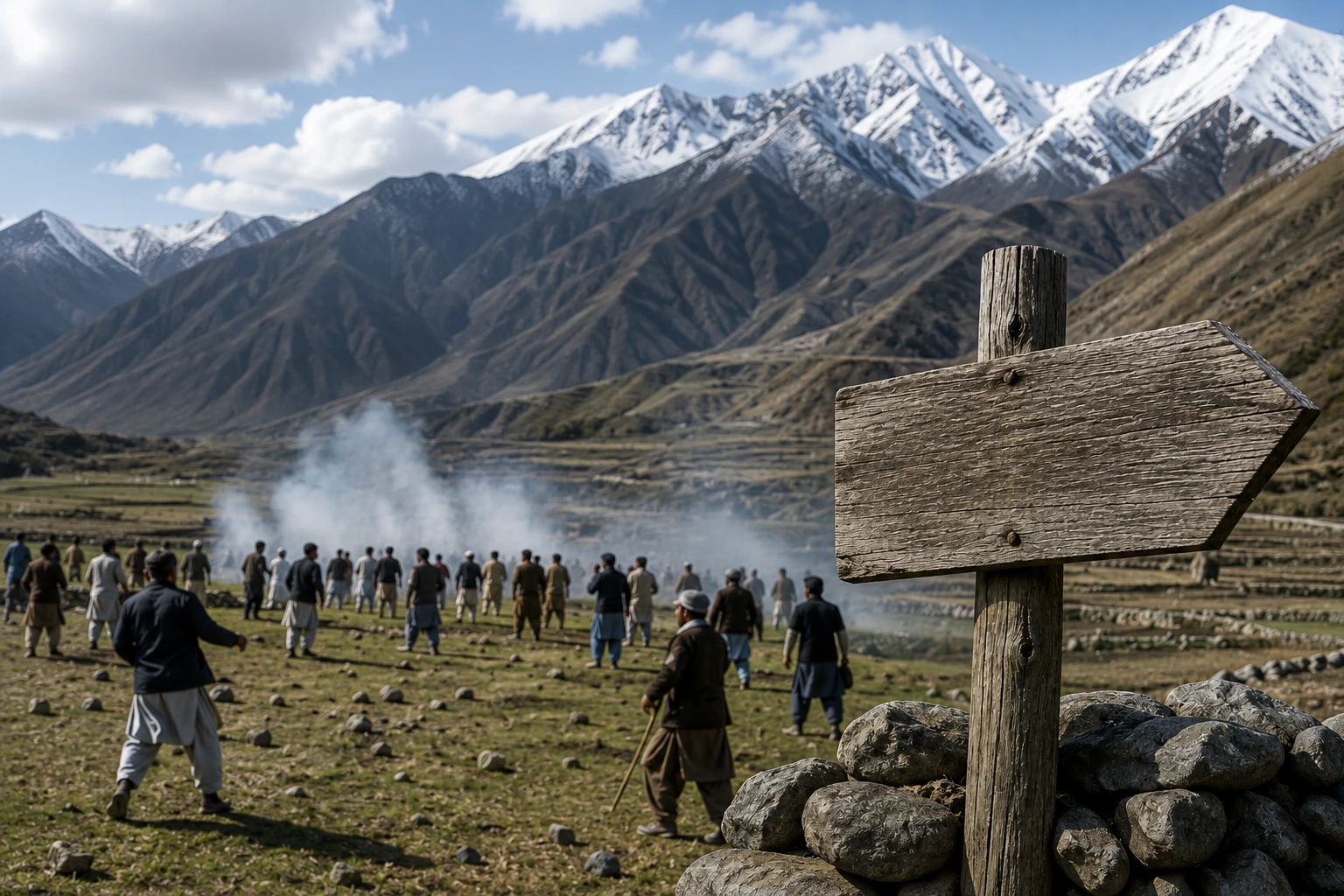
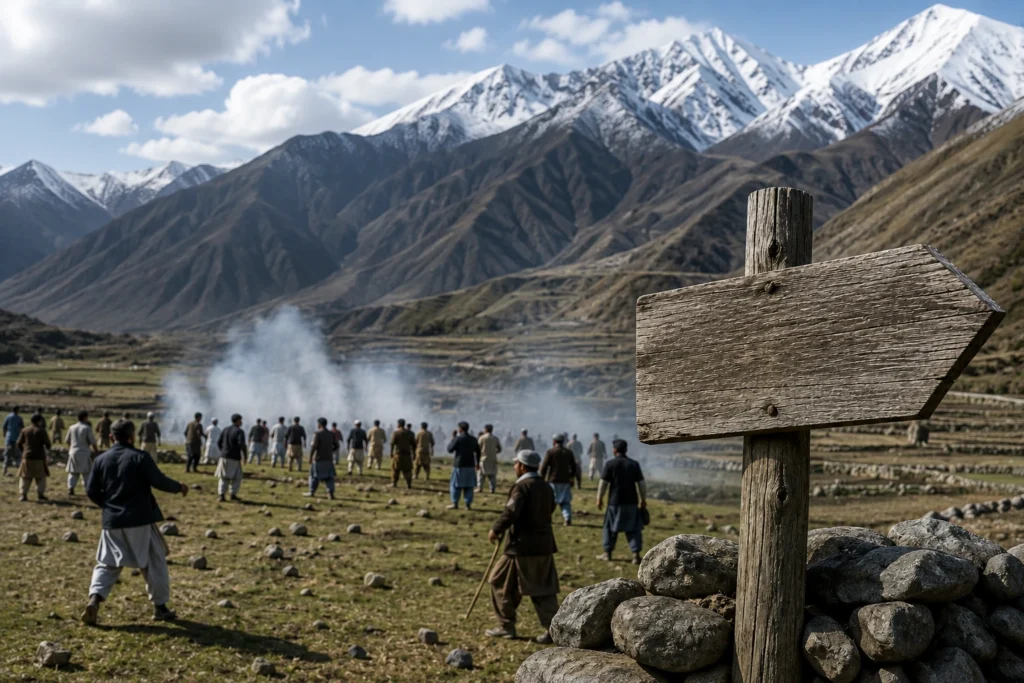
A violent clash between two groups in Kharmang district, Baltistan, has left four people dead and several others injured, according to police and local reports. The incident occurred on Thursday in the suburbs of the district, when firing broke out between two groups over a dispute concerning grazing land. The dead and injured were shifted to hospital, with two of the injured reported to be in critical condition.
Following the incident, Baltistan’s Deputy Inspector General (DIG) of Police and the Commissioner reached the site, and security was tightened in the area to maintain law and order. Police and rescue teams launched a rescue operation, and investigators have begun collecting forensic evidence and recording statements as they work to identify and arrest those responsible.
The incident is significant not because pasture disputes are new to Gilgit-Baltistan — they are not — but because of how quickly a localized disagreement over grazing rights escalated into an armed confrontation with fatal consequences. In a region where pastoral livelihoods, fragile land records, and difficult terrain intersect, the Kharmang clash is a reminder of how unresolved land questions can turn deadly, and how much is still needed in terms of institutional capacity to prevent, de-escalate, and resolve such disputes before they reach this point.
This analysis looks beyond the immediate event to examine the structural causes behind pasture conflicts in Gilgit-Baltistan, the historical and administrative context that shapes them, and practical steps that could reduce the likelihood of similar tragedies.
Understanding the Root Causes
Pasture disputes in mountainous regions like Gilgit-Baltistan rarely stem from a single cause. They tend to emerge from the accumulation of several long-standing pressures:
Traditional grazing rights.
In much of Baltistan, access to pastureland has historically been governed by customary practice rather than formal legal title — rights passed down through generations, often without written documentation. When two communities or families both claim customary use of the same land, there is frequently no definitive record to settle the matter.
Historical land ownership claims.
Overlapping claims, sometimes dating back generations or to periods before formal district boundaries existed, continue to surface as flashpoints, particularly when new economic value is attached to land that was once considered marginal.
Lack of officially demarcated boundaries.
Much of Gilgit-Baltistan’s terrain — especially seasonal grazing land at higher altitudes — has never been comprehensively surveyed or mapped using modern methods. Boundaries are often understood locally rather than recorded officially, leaving room for disputes when memory, custom, and paperwork diverge.
Population growth and resource pressure.
As communities grow, demand for limited grazing and agricultural land intensifies, sharpening competition over the same finite resources.
Climate change and shrinking grazing land.
Changing weather patterns, glacier retreat, and shifting seasonal cycles are altering the availability and quality of pastureland across the Karakoram region, adding pressure to an already contested resource base.
Economic dependence on livestock.
For many households in Baltistan, livestock remains central to livelihood and food security. When grazing access is threatened, the stakes are not abstract — they are tied directly to household income and subsistence.
Weak enforcement of land laws.
Even where legal frameworks exist, enforcement capacity in remote districts is often limited, allowing disputes to fester rather than be resolved through formal channels.
Delays in administrative decision-making.
Land disputes referred to local administration or courts can take years to resolve, during which tensions between parties often continue to build.
Community rivalries and miscommunication.
Long-standing rivalries between villages or extended families, combined with rumor and miscommunication, can turn a disagreement over a specific parcel of land into a broader confrontation.
It should be stressed that, at this stage, the specific chain of events that led to Thursday’s clash in Kharmang has not been officially detailed beyond the fact that it involved a grazing land dispute between two groups. The causes above reflect the general pattern seen in pasture conflicts across the region, not a confirmed account of this particular incident, which remains under police investigation.
Historical Background
Gilgit-Baltistan, and Baltistan Division in particular, has a long history of communities managing shared natural resources through customary systems — informal councils of elders, seasonal rotation agreements, and locally recognized boundaries for grazing and irrigation. These systems worked reasonably well when population density was low and land pressure limited.
Over recent decades, however, these customary arrangements have come under increasing strain. Population growth, the gradual formalization of land administration, and the entry of new economic interests — including tourism-related land value increases in some areas — have all tested the durability of informal resource-sharing norms. Kharmang, carved out as its own district from Skardu in 2015, is part of a broader pattern seen across Baltistan Division where local disputes over grazing and agricultural land have periodically flared into confrontations, though each incident carries its own specific local context.
The broader lesson from earlier disputes across the region is consistent: where customary systems are not backed up by clear, modern, and enforceable land records, the risk of disagreements escalating remains high — particularly when both sides feel their claim has legitimate historical grounding.
Social and Economic Impact
The consequences of a clash like this extend well beyond the immediate casualties.
Families of victims bear the most direct and lasting cost — the loss of life, and for the injured, the burden of medical treatment and recovery, often in a district with limited healthcare infrastructure.
Community trust is often among the first casualties in the aftermath of intercommunal violence. Even after tensions cool, relationships between the groups involved can remain strained for years, complicating everyday cooperation on shared resources, trade, and social life.
Livestock owners and farmers in the affected area may face disruption to grazing patterns and agricultural activity, particularly if access to disputed land remains contested or restricted during and after investigations.
Local businesses, already operating in a challenging remote economy, can see reduced activity if security concerns limit movement or if the clash discourages visitors and traders from the area.
Tourism, a growing part of Gilgit-Baltistan’s economy and a significant source of livelihood diversification, is sensitive to perceptions of instability. Incidents of violence, even localized ones, can affect the broader region’s image, despite most of Gilgit-Baltistan remaining unaffected by such disputes.
Education and children’s wellbeing can be disrupted in affected communities, particularly if security concerns keep schools closed temporarily or if children are exposed to the trauma of violence in their community.
Women’s participation in community and economic life can be further constrained in the aftermath of violence, as households often become more risk-averse and restrictive during periods of heightened tension.
Regional stability and public confidence in local institutions are also at stake. Each unresolved or poorly managed land dispute that turns violent reinforces public perception that formal institutions are not equipped to prevent such outcomes — a perception that, over time, can push communities further toward informal or unilateral means of asserting claims.
Governance and Administrative Challenges
Examining this incident constructively requires looking honestly at the governance gaps that allow pasture disputes to escalate to violence, without assigning blame to specific individuals or institutions absent verified findings.
Land record management across much of Gilgit-Baltistan remains incomplete or outdated, particularly for grazing land that has traditionally fallen outside formal revenue records.
Boundary demarcation using modern surveying methods — GPS, GIS mapping, satellite imagery — has not been comprehensively completed across remote and high-altitude pasture areas, leaving many boundaries defined only by local understanding.
Local administration’s role in mediating disputes before they escalate is critical, but under-resourced district administrations, covering vast and difficult terrain with limited staff, often struggle to intervene early enough.
Police response in this instance appears to have been reasonably swift, with the DIG and Commissioner reaching the scene and rescue operations beginning promptly — a positive indicator worth noting even as broader systemic questions remain.
Conflict prevention mechanisms, such as standing local dispute-resolution bodies with authority to intervene before tensions boil over, are inconsistently present across districts.
Legal gaps around customary land rights versus formal title continue to create ambiguity in adjudicating competing claims.
Disaster and emergency response capacity in remote districts like Kharmang is constrained by distance from major hospitals and limited local medical infrastructure, which can affect outcomes for the critically injured.
Coordination among government departments — police, local administration, land revenue authorities, and health services — is essential during and after such incidents, and the involvement of senior officials (the DIG and Commissioner) suggests some degree of coordinated response in this case.
Environmental Dimension
Environmental change is increasingly a background factor in pasture disputes across the Karakoram and wider Himalayan region:
- Glacier retreat, well documented across Gilgit-Baltistan, is altering the water sources that sustain both irrigated agriculture and natural pastureland.
- Water shortages in some valleys are affecting the productivity and availability of grazing land, particularly during peak summer grazing months.
- Reduced pasture availability, whether from climatic shifts or overuse, intensifies competition over remaining usable land.
- Overgrazing, a consequence of shrinking available pastureland relative to livestock numbers, further degrades the resource base over time.
- Seasonal migration patterns of pastoral communities moving livestock between lower and higher pastures can bring different groups into closer, more frequent contact over shared or adjacent land.
- Broader climate change impacts in Gilgit-Baltistan — including unpredictable weather and shifting seasons — add a layer of uncertainty that traditional resource-sharing arrangements were not originally designed to absorb.
These environmental pressures do not cause disputes on their own, but they raise the stakes of disputes that already exist over land whose boundaries and rights remain unclear.
Expert Perspectives
Conflict resolution specialists who study land disputes in mountain and pastoral communities generally point to a common pattern: violence is more likely where formal dispute-resolution channels are slow, inaccessible, or not trusted by the parties involved, pushing people toward self-help remedies.
Environmental and rural development experts working on Himalayan and Karakoram communities have similarly noted that climate-driven changes in resource availability are an increasingly important, though often overlooked, contributor to local conflict risk — one that formal land governance systems have been slow to incorporate into planning.
Legal scholars examining customary versus statutory land rights in Pakistan’s mountain regions have highlighted the persistent tension between locally recognized custom and formal legal frameworks, arguing that disputes are most likely to turn violent in the gap between the two.
Community elders and livestock specialists, drawing on generations of practical experience, generally emphasize that traditional mediation mechanisms — where still functional — remain one of the fastest and most locally trusted ways to de-escalate disputes, provided they are given the authority and support to act before tensions harden.
These perspectives reflect general patterns identified in research and practice on pastoral land conflict, not statements made specifically about the Kharmang incident, for which no named expert commentary is currently available in verified reporting.
How Similar Incidents Can Be Prevented
Government
- Digitize land and pasture records across all districts, prioritizing areas with a history of disputed claims.
- Complete boundary demarcation using GIS and satellite mapping for grazing and pastoral land, not just agricultural and residential land.
- Establish permanent, accessible land dispute resolution tribunals at the district level, with authority to issue binding and enforceable decisions.
- Improve coordination between district administrations, particularly in areas where boundaries or resource use span more than one jurisdiction.
- Strengthen local policing and early-warning systems to flag disputes before they escalate to violence.
- Invest in sustainable pasture management programs that address resource scarcity directly, rather than only its symptoms.
- Develop climate adaptation strategies specifically tailored to mountain pastoral communities.
Local Communities
- Revive and support traditional mediation councils where they retain community trust and legitimacy.
- Encourage structured inter-community dialogue before disputes reach a breaking point.
- Promote peaceful conflict resolution norms, particularly among younger community members.
- Establish joint grazing committees to manage shared or contested resources collaboratively.
- Raise awareness of legal rights and responsibilities around land and grazing access.
- Actively discourage recourse to violence through community-level education and leadership.
Civil Society
- Conduct mediation and peacebuilding programs tailored to land and resource disputes.
- Run legal awareness campaigns to help communities understand and access formal dispute-resolution channels.
- Support youth engagement initiatives that build alternative models of leadership and conflict resolution.
- Facilitate structured dialogue between groups with a history of tension.
Technology
- Deploy GIS-based land mapping to establish clear, verifiable boundaries.
- Build accessible digital land records that both administration and communities can consult.
- Use drone-assisted surveys for difficult-to-access pasture areas.
- Develop community reporting systems to flag emerging tensions early.
- Introduce mobile platforms for registering and tracking disputes.
- Establish early-warning systems that can alert authorities to escalating tensions before they turn violent.
Lessons for Gilgit-Baltistan
The Kharmang clash, whatever its final official casualty count, points to broader lessons relevant across the region:
- Sustainable resource management must account for both population growth and climate-driven changes to pastureland availability.
- Rule of law needs to be visibly accessible and timely, particularly for land disputes, if communities are to trust formal channels over self-help remedies.
- Community cooperation, built on functioning traditional and modern mediation structures, remains one of the most effective safeguards against escalation.
- Climate resilience planning cannot be separated from conflict prevention in mountain pastoral economies.
- Good governance, including transparent and complete land records, is foundational to reducing the ambiguity that fuels disputes.
- Inclusive development that accounts for the needs of pastoral and agricultural communities alike helps reduce the zero-sum framing that can drive conflict.
- Long-term peacebuilding requires sustained investment, not just crisis response after violence has already occurred.
Conclusion
The clash in Kharmang is a tragedy for the families and communities directly affected, and a warning sign for the wider region. Preventing similar incidents in the future will require transparent governance, accurate and accessible land records, fair and timely legal processes, genuine community participation in resource management, sustainable approaches to natural resource use, and continuous dialogue and trust-building between communities and the institutions meant to serve them.
Gilgit-Baltistan’s mountain communities have long demonstrated resilience and resourcefulness in managing shared, scarce resources. Building on that foundation — while closing the gaps in land governance and dispute resolution that incidents like this expose — offers the clearest path toward preventing future loss of life over disputes that, in principle, are resolvable without violence.
This analysis is based on verified reporting available as of July 17, 2026. Casualty figures and details of the incident may be updated as official investigations proceed; readers and editors should confirm the latest toll with local police or district administration before publication or republication.