GB Lawmakers Demand Federal Funds as Flood-Hit Communities Await Rehabilitation
Gilgit-Baltistan flood rehabilitation: Members of the Gilgit-Baltistan Assembly, cutting across treasury and opposition benches, have called on the federal government to release funds for the rehabilitation of communities devastated by this year’s floods. The demand, raised during a heated assembly session this week, signals that the region’s disaster response is shifting from emergency rescue toward the slower, costlier work of reconstruction.
Weeks after flash floods and landslides tore through valleys across Gilgit-Baltistan, damaging roads, bridges, irrigation channels and homes, lawmakers say affected families are still waiting for meaningful support. At the centre of the debate is a rehabilitation plan worth billions of rupees that has been sitting with a federal body for approval, with no confirmed timeline for release. For a region that depends heavily on federal transfers to fund its development budget, that pending approval has become a pressing political and humanitarian issue.
Gilgit Assembly members Call for Federal Support
The demand came during a session of the Gilgit-Baltistan Assembly chaired by Speaker Malik Kifayatur Rehman, according to Dawn. Lawmaker Aman Ali Ameer tabled a resolution urging the Flood Commission of Pakistan to approve a PC1 — a formal project planning document required for federal funding — that the GB government had already submitted for the rehabilitation of flood-affected people.
Lawmakers seek funds for flood recovery.
Members from both sides of the house backed the call. Kulsoom Mehdi of the Pakistan Peoples Party told the assembly that recent floods had severely disrupted livelihoods, damaging roads, homes, farmland and irrigation channels and killing livestock across Haramosh. She said the federal government should release the funds so that rehabilitation work in affected areas could proceed.
Abdul Jahan of the Pakistan Muslim League-Nawaz noted that the frequency of natural disasters in the region has become alarming, and said the GB government does not have the financial resources to respond on its own.He also cited a Rs2 billion allocation made by the prime minister in 2024 for flood-affected areas, which the federal government later received back after authorities failed to use the funds. Lawmakers pointed to the case as evidence of gaps in the disbursement and utilisation of relief funds.
Rana Farooq of the PML-N also raised concerns about flood-affected communities in Astore Valley, citing past cases in which authorities misused relief funds. Minister for Communication and Works Mohammad Naseem told the house that the chief minister had already announced the construction of houses for displaced families, but reiterated that GB lacks the funds to manage disasters on its own.
Responding to the debate, Chief Minister Amjad Hussain suggested forming a committee to draft recommendations for the federal government. The speaker deferred the resolution to a later sitting this week for a vote, pending amendments.
Flood Damage Leaves Communities in Need of Rehabilitation
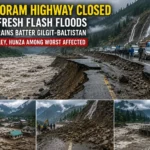
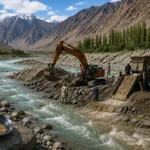
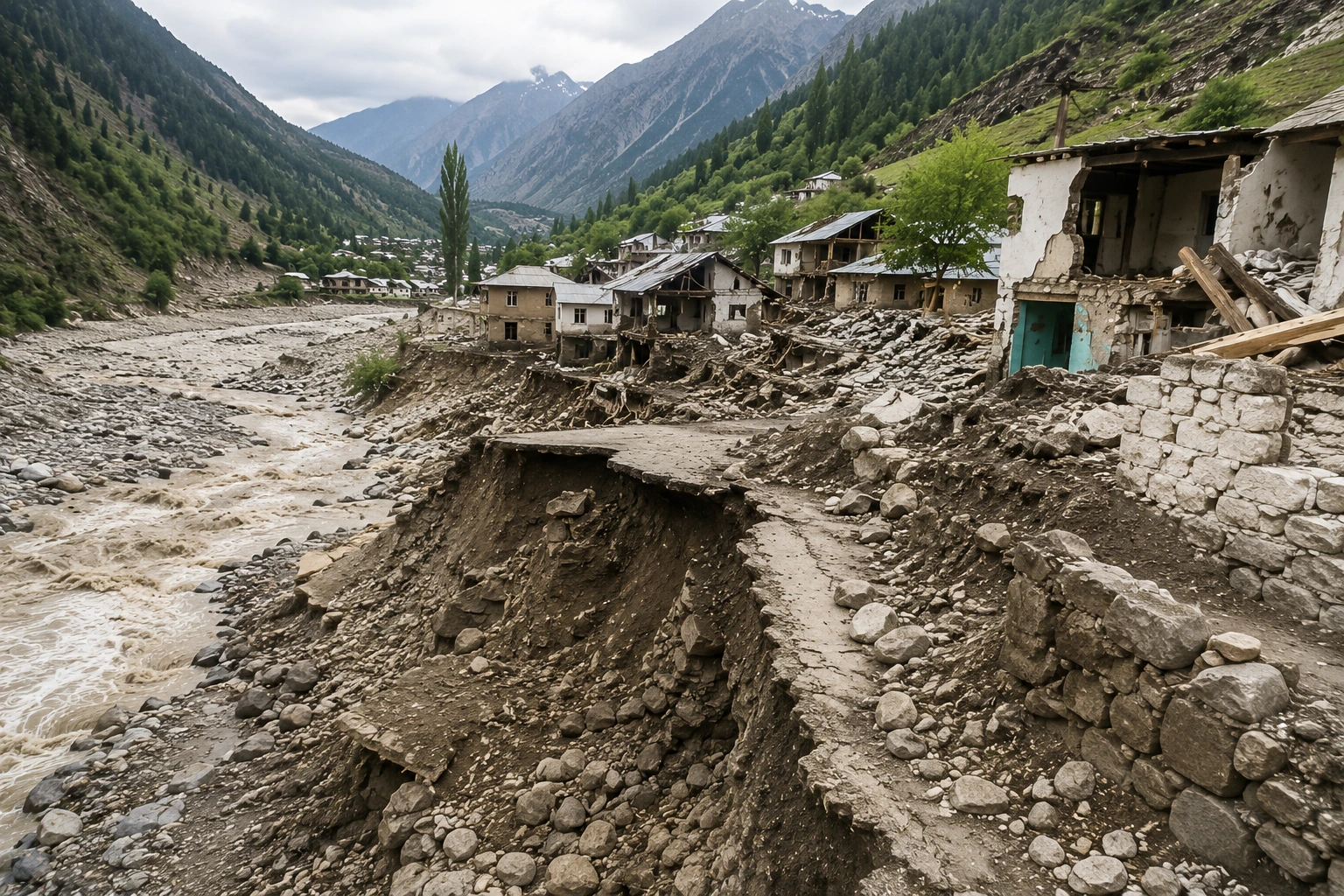
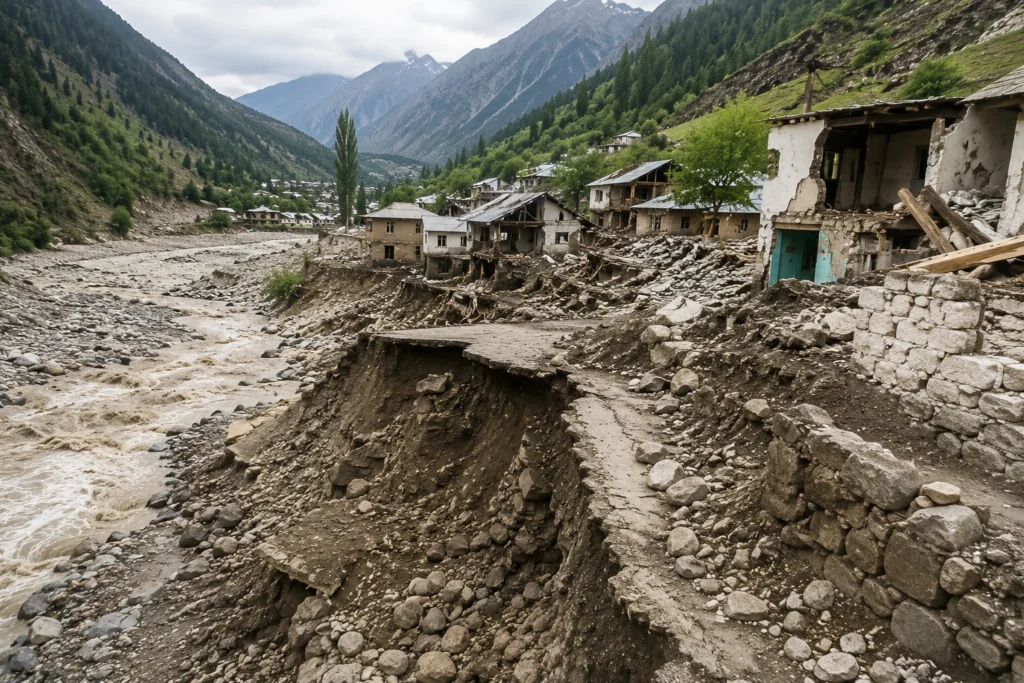
Gilgit-Baltistan has faced repeated flooding this monsoon season, with flash floods and landslides affecting multiple districts, including Ghizer, Gilgit, Skardu, Ghanche, Kharmang, Shigar, Hunza, Diamer, Nagar and Astore.Floods damaged roads, bridges, water and irrigation channels, farmland and homes, while several routes, including sections in Haramosh, remained blocked for extended periods as authorities cleared debris and restored access.
In remote mountain communities, this kind of infrastructure damage carries outsized consequences. A single washed-out bridge or blocked road can cut a village off from markets, schools, health facilities and emergency services for days or weeks. Damage to irrigation channels threatens the agricultural income many households depend on, particularly heading into the harvest season.
Rs6 Billion Rehabilitation Plan
According to the resolution tabled in the assembly, the GB government has submitted a PC1 worth Rs6 billion to the Flood Commission of Pakistan for the rehabilitation of flood-affected people.The assembly session ended without approval of the plan.
The PC-I aims to finance rehabilitation work for communities and infrastructure damaged by this year’s floods. However, the federal Flood Commission must approve the proposal before the GB government can release or disburse the funds. Lawmakers used the resolution to press the federal government to move on the request, framing it as essential to getting rehabilitation work underway. Authorities have not yet announced when the federal commission will decide on the proposal.
Displaced Families Face an Uncertain Recovery
The debate returned repeatedly to specific communities still struggling to recover. Lawmakers said displaced residents, including those in Talidas Valley in Ghizer, were still waiting for rehabilitation support after the floods. They also highlighted ongoing hardships in Haramosh and Astore Valley, where floods damaged homes, farmland and irrigation infrastructure and killed livestock in some areas.
For displaced families, recovery involves more than emergency shelter. Restoring access roads, rebuilding irrigation systems, and getting agricultural land back into usable condition are all necessary before livelihoods can stabilise. Lawmakers noted that without federal funding, the GB government’s ability to move from short-term relief to longer-term rehabilitation remains limited.
From Rescue Operations to Long-Term Recovery
The assembly debate reflects a broader shift underway in Gilgit-Baltistan’s disaster response — from the acute phase of rescue and relief toward restoration, rehabilitation and reconstruction. Immediately after flooding hits, the priority is search and rescue, followed by the distribution of food, tents and other emergency supplies. What comes next is different in scale and cost: rebuilding roads, bridges and irrigation systems in a way that can withstand future flooding, rather than simply patching damage until the next disaster strikes.
Lawmakers’ comments suggest that gap between emergency response and lasting reconstruction is where the region is currently stuck, with local resources insufficient to bridge it alone.
Why Federal Funding Matters for Gilgit-Baltistan
Gilgit-Baltistan’s mountainous terrain makes infrastructure projects — roads, bridges, irrigation networks — expensive and logistically demanding compared to similar projects in the plains. Multiple lawmakers in the session pointed to the region’s limited financial capacity to fund major rehabilitation work on its own, which is why they are pressing the federal government for support through mechanisms like the PC1 process. The specifics of how funding is constitutionally allocated between the federal government and Gilgit-Baltistan were not detailed in the assembly proceedings.
What Happens Next?
Several developments are worth watching in the coming days and weeks:
- Whether the Flood Commission of Pakistan approves the Rs6 billion PC1 submitted by the GB government.
- The outcome of the assembly vote on the resolution, which was deferred for further amendments.
- Any recommendations produced by the committee the chief minister proposed forming.
- Progress on the chief minister’s earlier announcement of house construction for displaced families.
- Continued restoration of blocked roads and damaged infrastructure in affected districts.
It’s worth being clear about what has and hasn’t happened: as of now, the Rs6 billion rehabilitation plan is a pending request awaiting federal approval, not an approved or released fund.
The Road Ahead for Flood-Affected Communities
For families in Talidas, Haramosh, Astore and other flood-hit areas, the assembly debate represents another step in a rehabilitation process that has yet to reach them in full. Lawmakers from across the political spectrum agreed on the scale of the need, even as they raised concerns about past mismanagement of disaster funds. What happens next will depend on decisions made outside the assembly chamber — at the Flood Commission of Pakistan and within the federal government — and on whether funds, once released, reach affected communities in a timely and transparent way.
What We Know
- Members of the Gilgit-Baltistan Assembly, from both treasury and opposition benches, have demanded federal government support for flood rehabilitation.
- The GB government has submitted a PC1 worth Rs6 billion to the Flood Commission of Pakistan for rehabilitation of flood-affected people; it has not yet been approved.
- Communities face damage to homes, roads, water and irrigation channels, farmland and, in some areas, livestock losses.
- Talidas valley (Ghizer), Haramosh and Astore valley were specifically named by lawmakers as areas where displaced or affected people are still waiting for support.
- The rehabilitation funding remains a pending request; the assembly’s resolution on the matter was deferred to a later sitting for a vote.