Recovery Operation Ends Hope After Broad Peak Avalanche; All 10 Climbers, Including Nirmal Purja, Confirmed Dead
Broad Peak Avalanche: Recovery Operation Confirms Deaths of All 10 Climbers, Including Nirmal Purja
Introduction
Search and rescue authorities have confirmed that all 10 climbers swept away in the Broad Peak avalanche have died, closing a three-day search across one of the most difficult stretches of terrain in Pakistan’s Karakoram range. The confirmation, issued on August 1, brings a tragic end to an expedition that included some of the mountaineering world’s most respected names, among them renowned climber Nirmal Purja and Pakistani guide Sohail Sakhi.
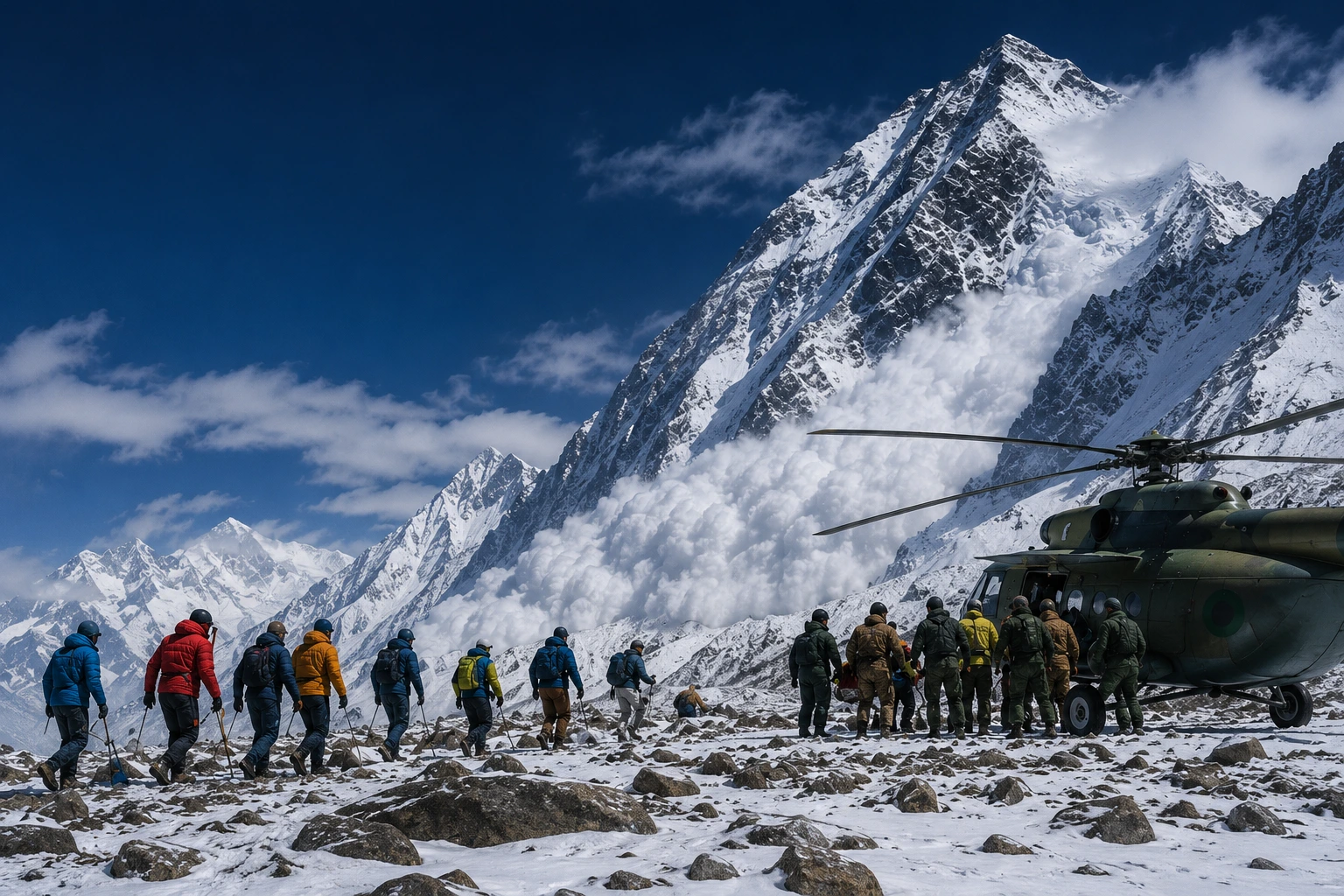
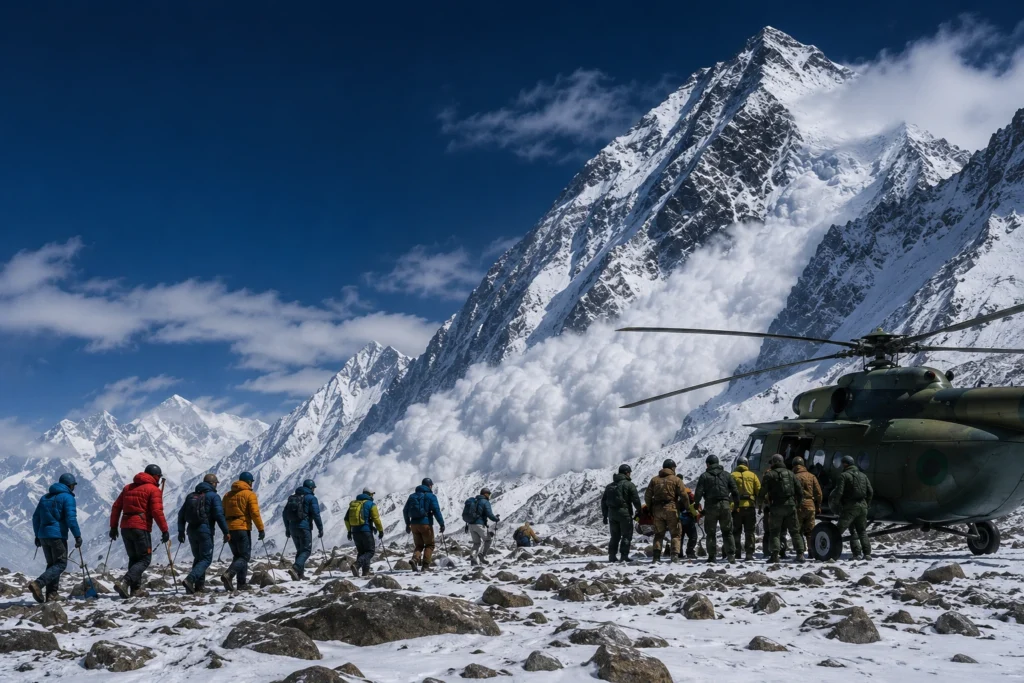
The Broad Peak avalanche struck on Thursday, July 30, triggering a major high-altitude rescue operation in Gilgit-Baltistan involving Pakistan Army helicopters, experienced Nepali and Pakistani climbers, and the Alpine Club of Pakistan.
Bodies Recovered; Death Toll Confirmed
The Alpine Club of Pakistan reported the 10-member expedition missing after contact with base camp was lost following the avalanche. Over the following two days, rescue teams located and recovered bodies in stages as weather and terrain allowed.
On August 1, Elite Exped confirmed that all 10 climbers had died. The Alpine Club of Pakistan also verified the deaths and extended condolences to the bereaved families.
Those confirmed dead were Nirmal Purja, Sohail Sakhi, Pur Bahadur Gurung, Nima Sherpa, Kili Pemba Sherpa, Nawang Thindu Sherpa, Gyalu Sherpa, Nadhira Al Harthy, Mallory Geis, and Wang Zhong
Details of the Avalanche
GPS data showed the avalanche struck at around 6,600 metres between Camp II and Camp III on Broad Peak’s West Ridge route. The slide occurred around mid-morning on July 30, sweeping the entire team down the mountainside.
Broad Peak, at 8,051 metres, is the world’s 12th-highest mountain and lies in the Karakoram range close to K2. Unstable snow conditions in the days before the avalanche had already prompted several other expeditions to abandon their summit attempts.
Rescue and Recovery Operation
Pakistan Army helicopters joined ground teams in the rescue effort. The bodies of Nadhira Al Harthy, Pur Bahadur Gurung, and Mallory Geis were recovered and flown to Skardu on July 31
Poor weather forced a temporary suspension of the operation late Friday, but the search resumed the following day once conditions improved. Drone flights subsequently located additional bodies on the mountainside, and ground teams led by Nepali mountaineer Mingma Gyalje Sherpa and Pakistani climber Sirbaz Khan moved in to reach locations that helicopters alone could not access.
Climbers Involved
The 10-member expedition drew climbers and guides from five countries: Pakistan, Nepal, China, the United States and Oman. It was led by Nirmal Purja, the British-Nepali mountaineer known for completing all 14 of the world’s 8,000-metre peaks.
Sohail Sakhi, a Pakistani guide, geographer and high-altitude photographer associated with the outfitter Moving Mountains, was guiding American client Mallory Geis, who was attempting her first 8,000-metre peak. Nadhira Al Harthy of Oman was the first Omani woman to summit Mount Everest and had previously climbed K2. The Nepali contingent included several experienced high-altitude guides, while Wang Zhong represented the Chinese members of the team.
Challenges Faced by Rescue Teams
Rescue crews faced a combination of obstacles that slowed recovery efforts throughout the operation. The avalanche site sat on steep, technical terrain above 6,000 metres, where helicopters could not safely land or hover for extended periods. Loose avalanche debris made ground movement slow and hazardous, while rescuers also had to guard against the risk of triggering a second slide on already unstable slopes.
High altitude further limited both helicopter performance and the physical capacity of ground teams, and shifting weather repeatedly interrupted flights, forcing at least one full-day suspension of the operation.
Impact on Pakistan’s Mountaineering Community
The Broad Peak avalanche claimed one of the greatest losses in international high-altitude mountaineering in recent years, taking the lives of several experienced climbers, including Nirmal Purja.
For Pakistan’s mountaineering community specifically, the tragedy underscores both the risks inherent in Karakoram expeditions and the critical role that local guides, the Alpine Club of Pakistan and the Pakistan Army play in high-altitude rescue operations. Nepal’s Prime Minister, Balendra Shah, offered condolences over the deaths, describing them as a shock to the mountaineering world.
The tragedy has renewed concerns about avalanche safety and expedition planning during periods of unstable snowfall in the Karakoram.
Current Status and Official Updates
Authorities have confirmed the deaths of all 10 climbers. Authorities transported the recovered bodies to Skardu before transferring them to Islamabad and the victims’ home countries.
Conclusion
The confirmation that all 10 climbers died in the Broad Peak avalanche marks a somber close to a rescue operation that tested the limits of high-altitude search and recovery in the Karakoram. Mountain TV will continue to follow developments as identification procedures conclude and further official statements are released.
FAQs