KKH Closed as Flash Floods Hit Gilgit-Baltistan
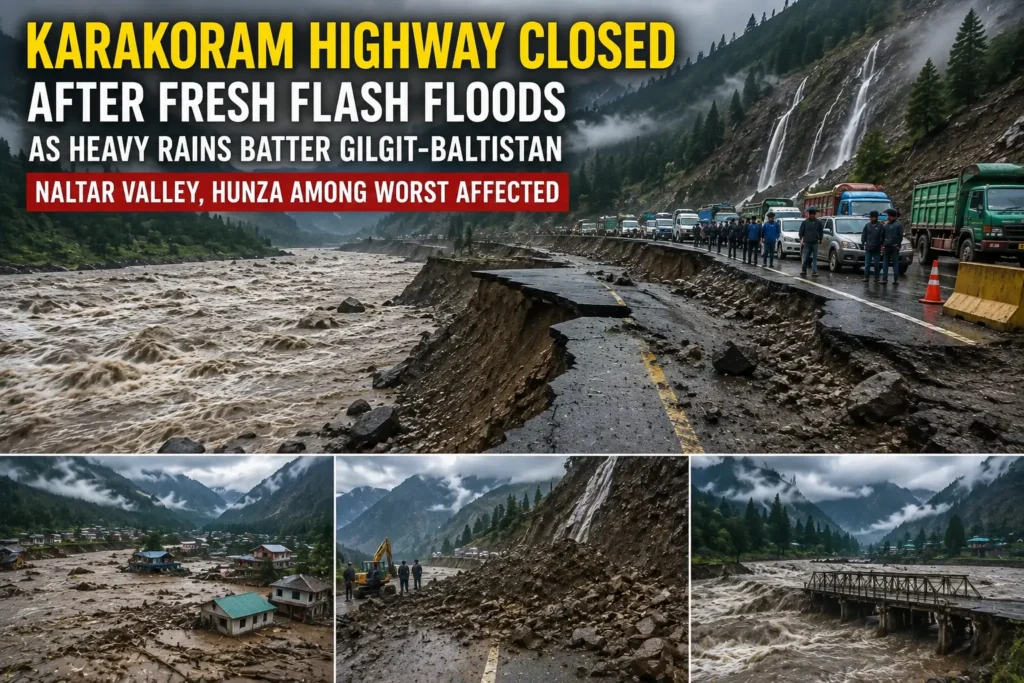
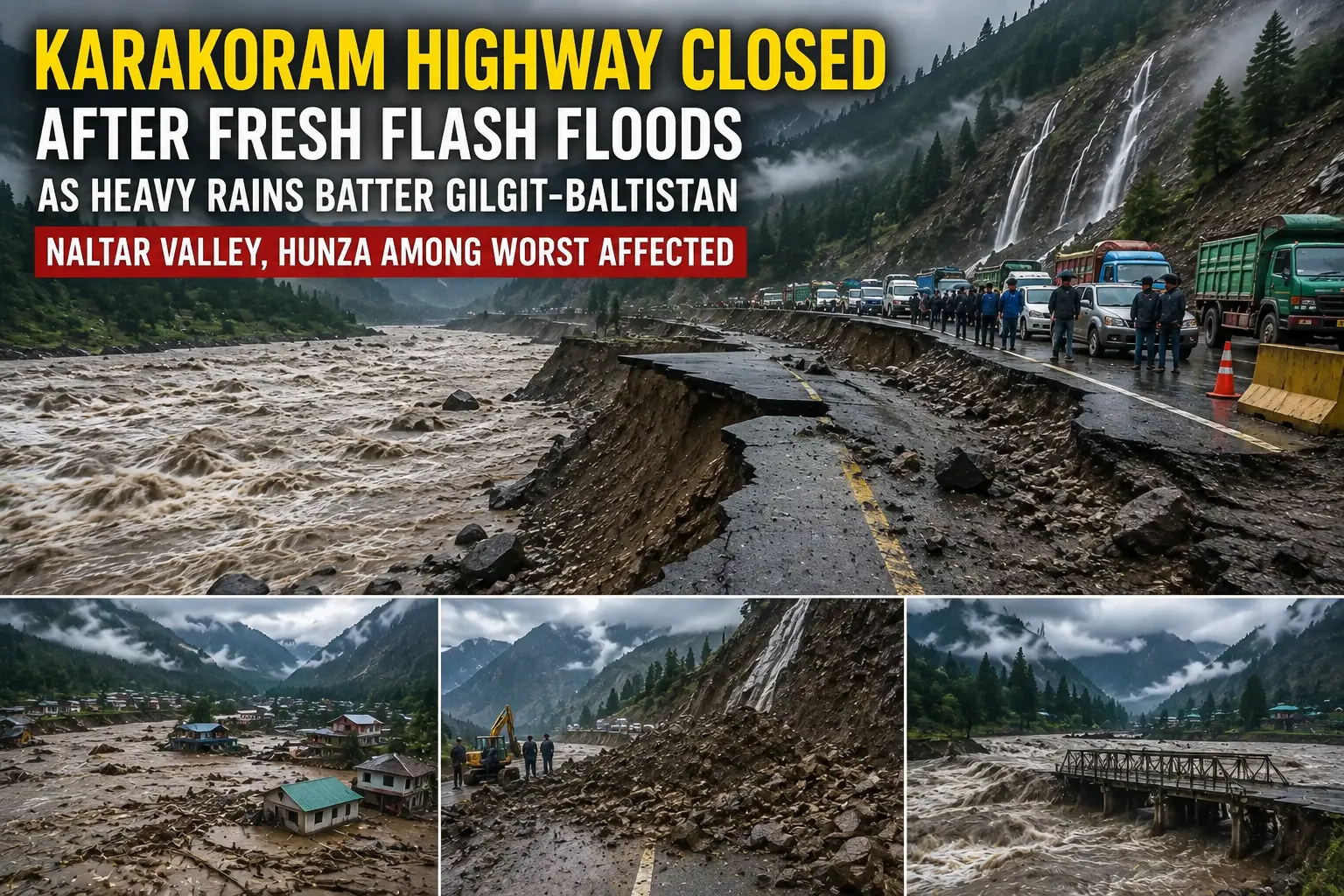
Karakoram Highway Closed After Fresh Flash Floods as Heavy Rains Batter Gilgit-Baltistan; Naltar Valley, Hunza Among Worst Affected
Gilgit-Baltistan is once again in the grip of a flooding emergency. A fresh spell of cloudbursts and accelerated glacier melt has triggered flash floods across several districts, cutting off the Karakoram Highway, damaging homes and farmland, and leaving hundreds of tourists and residents stranded.
The latest wave of destruction follows weeks of monsoon-linked disruption in the region and has renewed concern about how fast a single storm can now turn into a multi-district emergency. Authorities say the situation remains fluid, with damage assessments and restoration work continuing in real time.
This report brings together verified developments from Gilgit-Baltistan’s flood-hit districts, along with expert context on why these events keep recurring and what residents and travelers should do to stay safe.
Heavy Rains Trigger Fresh Flash Floods Across Gilgit-Baltistan
The latest flooding was set off by a combination of intense rainfall and unusually rapid glacier melt in the high mountains that ring Gilgit-Baltistan. When a burst of rain falls on already-saturated slopes and swollen glacial streams at the same time, narrow valleys can fill with water and debris within minutes, giving residents little warning.
Officials say homes, roads, bridges, farmland, and electricity infrastructure have all sustained damage across multiple districts. The destruction has been especially severe in valleys that channel meltwater from nearby glaciers, where floodwater and debris move fast and with little notice.
Authorities have also warned that rising levels in the Hunza, Nagar, and Indus rivers threaten communities downstream, with riverbank erosion already reported in several places.
Karakoram Highway Closure Disrupts Travel
Floodwaters closed the Karakoram Highway near Chilas, severing the only road link between Gilgit-Baltistan, the rest of Pakistan, and China. The closure has stranded tourists and cut off a vital route for supplies and travel.
For a region that depends almost entirely on this one highway for overland movement, any closure has an outsized effect. Vehicles carrying tourists, goods, and daily commuters back up on both sides of the blocked stretch, and remote valleys further up the route become harder to reach with relief supplies.
The KKH is also Gilgit-Baltistan’s main artery for trade and tourism revenue, so extended closures ripple through local businesses long after the water recedes. Authorities have been working to reopen the highway, though officials caution that further rain could disrupt restoration efforts.
Naltar Valley Among the Worst Affected
Naltar Valley, a popular tourist destination in Gilgit district known for its alpine lakes and ski slopes, has suffered some of the heaviest damage in this latest spell. A cloudburst in the valley’s upper reaches sent floodwater tearing through several settlements.
According to rescue officials, floodwaters damaged around a dozen houses, destroyed agricultural land and standing crops, and forced several families to leave their homes. The floods also blocked the Naltar Highway the valley’s only road link at multiple locations, stranding tourists until authorities reopened the route.
Rescue teams have been working to clear the road and reach cut-off families, though the terrain and continuing weather have slowed the pace of relief efforts in some pockets of the valley.
Hunza, Ghizer and Other Districts Face Growing Challenges
The flooding has affected more than just Naltar. In Upper Hunza, fast glacier melt sent a surge of water down the Juchar Nallah near Gulmit, briefly damaging and blocking a stretch of the Karakoram Highway before crews managed to reopen it.
Ghizer district has arguably borne the brunt of this spell. Flash floods near Mayon village blocked the Ishkoman River and formed a temporary lake that submerged parts of nearby Hasis village, putting homes, farmland, a school, and a mosque underwater and forcing residents to evacuate. The floodwater also cut off the Ghizer-Ishkoman road, severing access to the wider Ishkoman Valley until the artificial lake began to drain.
Further damage has been reported in Sherqila and other nearby settlements, where floodwaters have destroyed crops, brought down electricity poles, and disrupted power supply. Chilas and other districts along the Indus corridor also remain on alert as river levels stay elevated.
Rescue, Relief and Rehabilitation Efforts Intensified
Gilgit-Baltistan Chief Minister Amjad Hussain has directed the Gilgit-Baltistan Disaster Management Authority (GBDMA) and district administrations to speed up rescue, relief, and rehabilitation work across the affected areas.
On the ground, this has translated into evacuations from flood-hit villages, the deployment of heavy machinery to clear blocked roads, and the distribution of food, tents, medicine, and other essential supplies to displaced families. Restoring the Karakoram Highway and other key routes remains a top priority, since so much of the relief effort depends on road access.
Officials have acknowledged that rising water levels and continued mudflows are complicating restoration work in several locations, meaning some routes may stay closed longer than initially expected.
PMD Warns More Rain Is Expected
The Pakistan Meteorological Department (PMD) has forecast further rain over Gilgit-Baltistan in the coming days and has cautioned that the risk of flash floods, landslides, and glacial lake outburst floods remains elevated.
A glacial lake outburst flood, often abbreviated as GLOF, happens when a lake formed by melting glacier ice breaches its natural ice or debris barrier and releases a sudden, powerful surge of water downstream. Because these lakes can form or expand quickly during periods of intense heat or rain, they are difficult to predict and can strike with little warning.
The PMD has urged people living in or visiting glaciated valleys to stay away from riverbanks and stream beds, watch for sudden changes in water color or flow that can signal an upstream flood, and follow official advisories closely. River levels are being monitored closely in the days ahead, with authorities on alert for any sudden rise.
Impact on Tourism and Local Economy
Gilgit-Baltistan’s economy leans heavily on tourism, and the timing of this flooding, in the middle of the summer travel season, could not be worse for local businesses. Hotels, guesthouses, and transport operators in valleys like Naltar and Hunza depend on a steady flow of domestic visitors during these months.
Road closures mean stranded tourists face canceled bookings and disrupted travel plans, while local hoteliers and tour operators lose income during what is normally their busiest stretch of the year. Transport companies moving goods along the KKH also face delays and higher costs when the highway is blocked.
Beyond tourism, the damage to farmland and irrigation channels threatens crop yields for families who rely on agriculture, and disrupted supply chains make it harder to get food, fuel, and construction materials into remote valleys until roads reopen.
Climate Change and Increasing Weather Extremes
Scientists and disaster officials have pointed to warmer-than-usual temperatures as a key driver behind the accelerated glacier melt seen across Gilgit-Baltistan this year. Gilgit-Baltistan sits within the Hindu Kush-Karakoram-Himalaya region, home to one of the largest concentrations of glaciers outside the polar regions, which makes it especially sensitive to shifts in temperature.
As average temperatures rise, glaciers melt faster, existing glacial lakes swell, and new ones can form in previously stable terrain. When that meltwater combines with intense monsoon rainfall, as has happened repeatedly this season, valleys that would once have handled a storm safely can be overwhelmed within hours.
This combination of glacier melt and heavier, more erratic rainfall is why disaster officials keep stressing preparedness. Communities in narrow, glacier-fed valleys remain especially exposed, and early warning systems, evacuation planning, and monitoring of glacial lakes are increasingly central to reducing casualties and damage when the next storm arrives.
Safety Advice for Residents and Tourists
With more rain forecast and rivers already running high, officials are urging caution across Gilgit-Baltistan. Recommended precautions include:
- Avoid unnecessary travel to flood-affected or glacier-fed valleys until conditions stabilize.
- Follow advisories issued by the PMD and the GBDMA rather than relying on informal reports.
- Stay well away from riverbanks, stream beds, and flood channels, especially in narrow valleys.
- Keep emergency supplies, including food, water, and a torch, ready in case of sudden evacuation.
- Monitor official updates regularly, particularly before and during travel along the Karakoram Highway or into remote valleys.
Tourists planning trips to Hunza, Naltar, or other popular destinations in the region should check road status and weather advisories before setting out, and remain flexible about itineraries given how quickly conditions can change.
Conclusion
Gilgit-Baltistan is facing one of its more serious flooding episodes of the season, with the Karakoram Highway closure, damage in Naltar Valley, and flooding across Hunza and Ghizer underscoring how exposed the region remains to cloudbursts and glacier melt. Rescue and relief operations are underway, but officials caution that the situation is still developing.
With the PMD forecasting more rain and warning of continued flash flood, landslide, and GLOF risks, authorities are urging residents and tourists alike to stay alert and follow official guidance. Restoration of blocked roads and support for displaced families remain the immediate priorities as damage assessments continue across the affected districts.
This is a developing story. Mountain TV will continue to update this report as authorities release further information on rescue operations, road restoration, and weather conditions in Gilgit-Baltistan.
Sources
- Karakoram Highway closed, Ghizer worst hit by more flash floods — Dawn
- Torrential rains disrupt travel across GB as floods wash away roads, bridges — Dawn
- Road links to parts of Gilgit-Baltistan remain severed after floods and GLOF damage — Pakistan Today
- Torrential rains cut off roads and strand travellers across Gilgit-Baltistan — Pakistan Today
- Flash floods, GLOFs cut off multiple GB areas — Daily Times
- PMD issues GLOF alert for Gilgit-Baltistan, KP — The Frontier Post
- PMD issues fresh flash flood warning as heavy rains continue — The Nation