Ibex Trophy Hunting Permits Reach $13,200 as GB Balances Conservation and Revenue
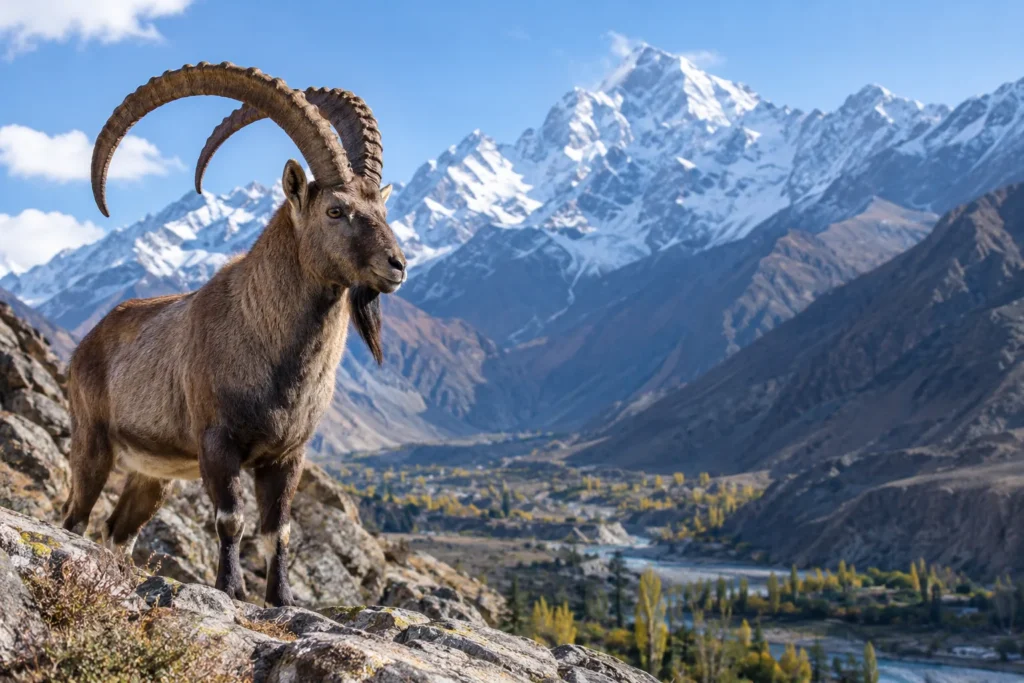
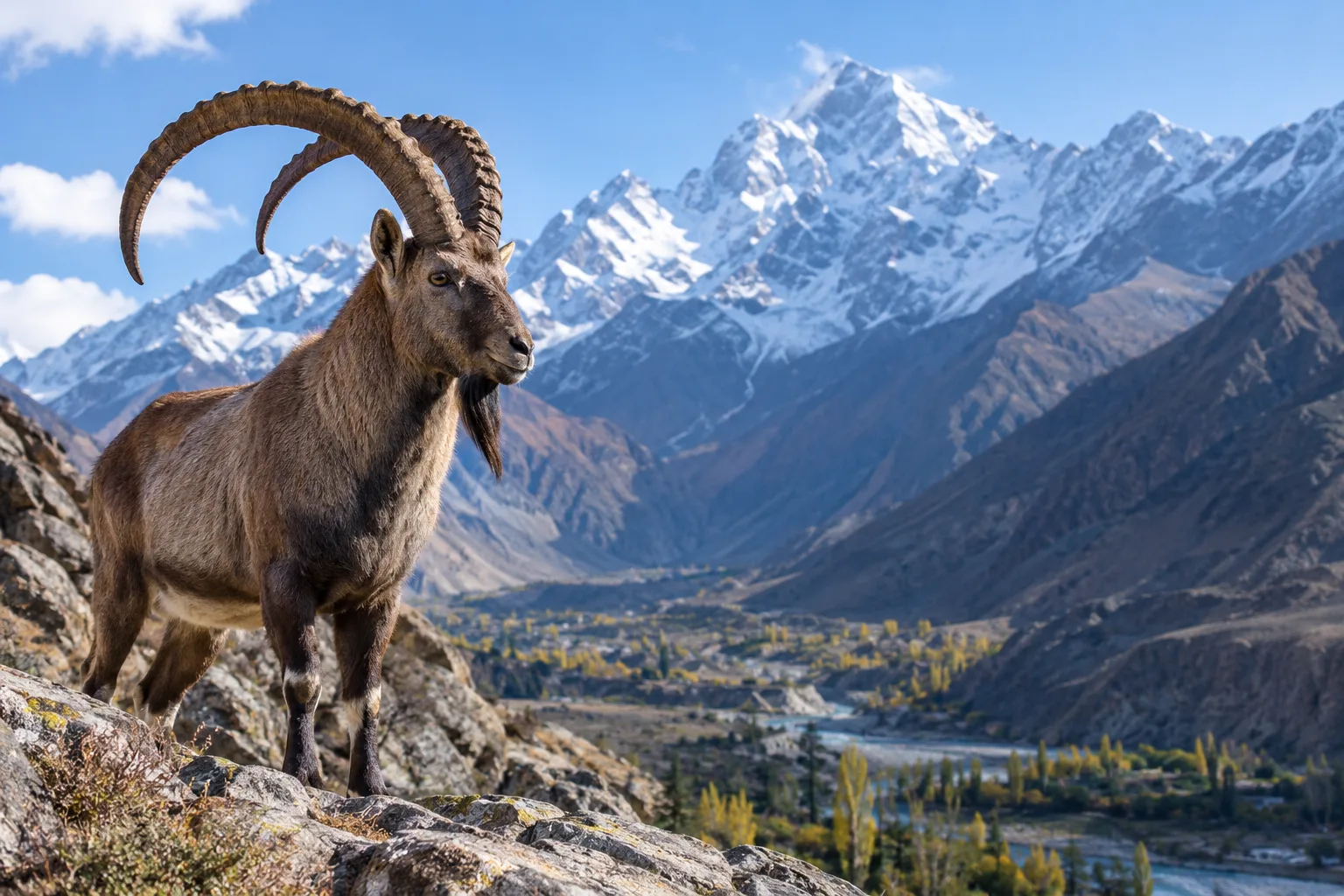
High above the villages of Gilgit-Baltistan, where glaciers feed the valleys and pastures thin out into rock and scree, the Himalayan ibex has long shared its range with herders and farmers. The wild goat, recognisable by its curved horns and sure-footed climb across cliff faces, is as much a part of the region’s identity as the peaks around it. Every autumn, that relationship between wildlife and community comes into sharper focus, as the Gilgit-Baltistan Wildlife and Parks Department opens its annual trophy hunting auction — a programme that turns a single animal’s hunting rights into a direct source of income for the mountain communities living nearest to it.
The 2026-27 Auction
The department auctioned trophy hunting permits for the 2026-27 season on Thursday at the Forest, Parks and Wildlife Complex in Gilgit, drawing a large turnout of outfitters and hunters. Up for bidding were permits for three Astore markhors, 14 blue sheep and 100 Himalayan ibexes, with one additional Astore markhor permit carried over from the previous season.
This year, officials set the base prices at $200,000 for markhor, $25,000 for blue sheep, and $11,000 for Himalayan ibex. By the close of bidding, the top Astore markhor permit had fetched $356,000, with the second and third going for $301,000 and $294,000. The highest exportable blue sheep permit sold for $31,200, against a low of $25,100, according to Chief Conservator of Parks and Wildlife Zakir Hussain. The highest exportable ibex permit in the prime category went for $13,200, while the lowest sold for $11,500.
Hunting under this season’s permits will run from October 15, 2026, to April 10, 2027, in accordance with the GB Trophy Hunting Guidelines 2019. Wildlife officials are targeting roughly Rs650 million in revenue from the season.
How Trophy Hunting Revenue Supports Local Communities
Gilgit-Baltistan launched its trophy hunting programme in 1990, and wildlife officials and conservation groups credit it with helping protect species that poachers once heavily targeted. Under the program, local communities living in and around the hunting conservancies receive about 80 percent of the permit revenue, while the government keeps the remaining share.Communities have previously used these funds for health projects, school scholarships, small development schemes and emergency loans, according to wildlife department officials cited in earlier seasons’ reporting.
The underlying logic is straightforward: when a live ibex or markhor population generates income for a village through licensed, limited hunting, residents have a financial reason to guard against illegal hunting rather than tolerate it. Conservationists have pointed to this incentive structure as a central reason the programme has endured for more than three decades, even as debate over its methods continues.
Where the Debate Stands
Not everyone in the industry sees the current trajectory as sustainable. Business owners and tour operators in Gilgit-Baltistan have opposed permit rate increases over the past two years, arguing that steep base prices are hurting outfitters and, by extension, the communities that depend on hunting-linked income and tourism.
That concern is not hypothetical. In the 2025-26 season, permits for two Astore markhors, five blue sheep and ten exportable ibexes went unused, a shortfall officials linked to law-and-order disruptions in Gilgit and Skardu that led American and other foreign hunters to cancel their trips. The department estimated the resulting loss at around Rs200 million. That episode underlines a real risk in this year’s higher base prices and top bids: if international demand softens, whether because of security concerns, cost, or competition from other hunting destinations, the revenue that communities and conservation budgets rely on could fall short of projections.
There are broader questions too, ones this auction alone cannot answer. Different stakeholders, including outfitters and conservation researchers, have raised questions about how officials set hunting quotas against ibex population numbers, how consistently communities receive their share of the revenue, and whether higher permit prices could reduce the number of hunters needed to keep the programme financially viable. So far, officials have not published a verified population count or an updated breakdown of community benefits for this season alongside the auction results.
The Larger Question for Gilgit-Baltistan
The final bid for a Himalayan ibex permit — $13,200 — is a modest figure next to the markhor’s six-figure sums, but it sits inside the same balancing act. Gilgit-Baltistan has built a conservation model that depends on hunters willing to pay high prices for a limited, regulated harvest, with the bet that the money that follows will keep local communities invested in protecting the animals rather than depleting them.Whether the program continues to deliver will depend on decisions officials make in the coming months: how they set hunting quotas, how transparently they distribute revenue to villages, and whether they can keep the region’s mountains attractive and secure for the hunters on whom the system depends. For now, the ibex, the markhor and the blue sheep remain both a source of income and a test of how well Gilgit-Baltistan can manage the trade-off between using its wildlife and preserving it.