NDMA Issues Flood Alert for Gilgit-Baltistan as Heavy Monsoon Rains Raise Risk of Flash Floods
NDMA Flood Alert in Gilgit-Baltistan
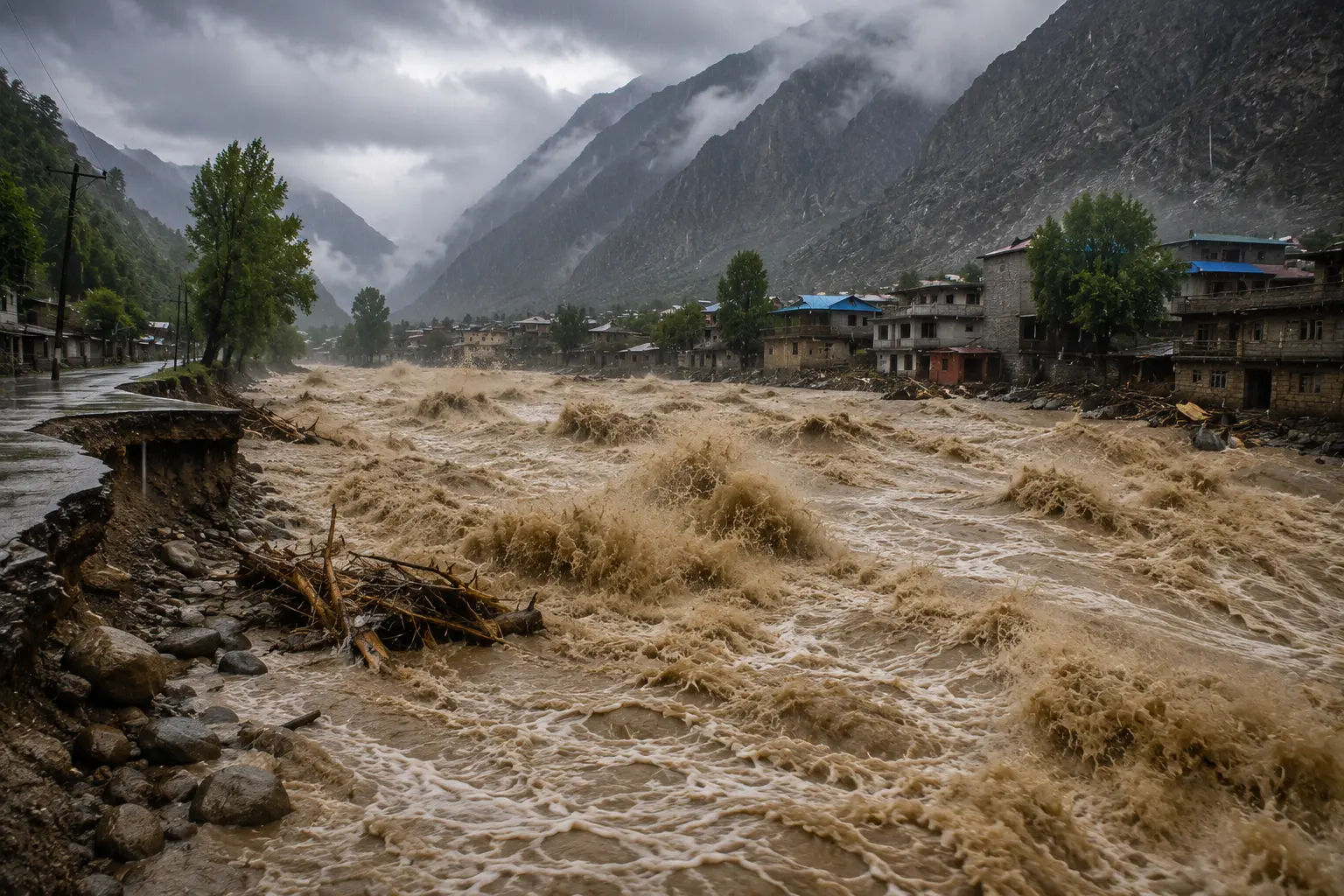
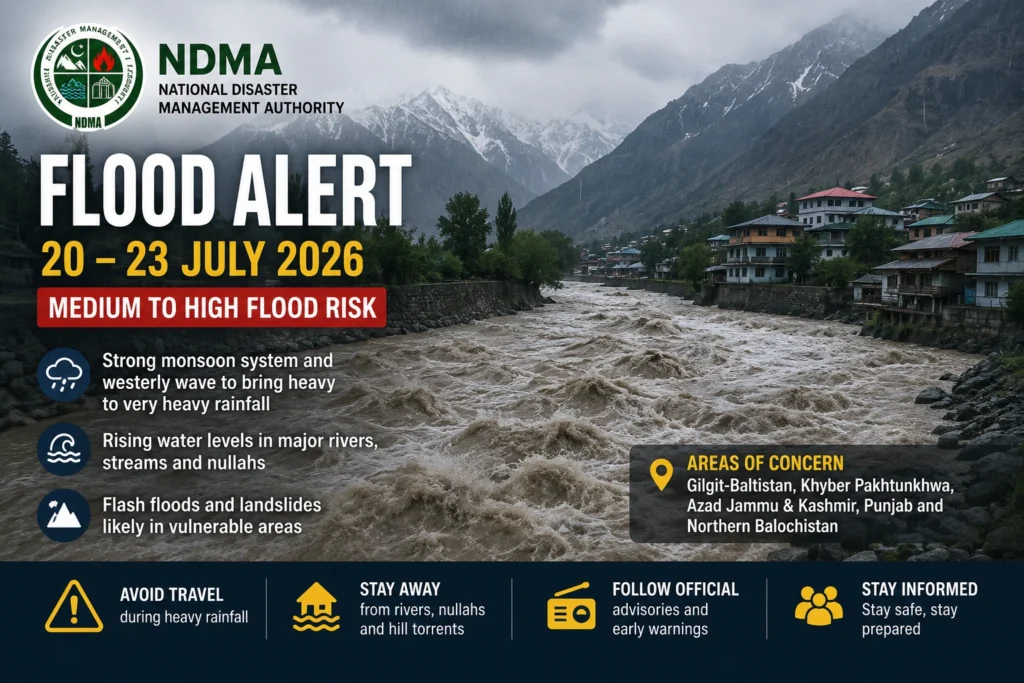
The National Disaster Management Authority (NDMA) has issued a medium to high flood risk alert for several regions of Pakistan, including Gilgit-Baltistan, from July 20 to July 23, 2026. According to the latest hydrological advisory, a strong monsoon weather system combined with an approaching westerly wave is expected to bring widespread rainfall, increasing the likelihood of flash floods, landslides, rising river levels, and urban flooding.
Authorities have urged residents, tourists, and local administrations to remain vigilant as weather conditions are expected to worsen over the coming days.
Gilgit-Baltistan Among the Most Vulnerable Regions
Gilgit-Baltistan is expected to receive isolated heavy to very heavy rainfall, significantly increasing the risk of:
- Flash floods in mountain valleys
- Glacial stream overflow
- Landslides on major highways
- Rapid rises in rivers and seasonal streams
- Disruptions to transportation and communication
Communities living near rivers, nullahs, and low-lying areas have been advised to remain alert and prepare for possible emergency situations.
Rising River Levels Expected
The NDMA has warned that water levels in Pakistan’s major rivers are expected to rise during the forecast period.
The advisory indicates:
- Medium to high flood levels are expected in the River Chenab at Marala.
- Water levels are likely to increase in the River Jhelum upstream of Mangla.
- High flows are forecast in the River Kabul and its tributaries.
- Rivers including the Swat, Panjkora, and Chitral are also expected to experience rising water levels.
Although these river systems are outside Gilgit-Baltistan, heavy rainfall in the region’s mountainous terrain could trigger dangerous flash floods in local streams and valleys.
Flash Floods and Landslides Remain Major Concern
Mountainous districts across Gilgit-Baltistan remain highly susceptible to:
- Sudden flash floods
- Landslides blocking roads
- Rockfalls
- Damage to bridges and infrastructure
- Flooding of agricultural land
Tourists planning to visit Hunza, Skardu, Astore, Ghizer, Ghanche, Diamer, or surrounding valleys are advised to monitor weather updates before traveling.
NDMA Advises Public to Take Precautions
The NDMA has advised citizens to:
- Avoid unnecessary travel during periods of heavy rainfall.
- Stay away from rivers, streams, and hill torrents.
- Follow official weather advisories and emergency alerts.
- Keep emergency supplies ready, including food, water, medicines, flashlights, and mobile phone chargers.
- Cooperate with local authorities in case evacuation becomes necessary.
Provincial and district administrations have also been instructed to activate contingency plans and ensure emergency response teams remain on standby throughout the alert period.
Safety Tips During Heavy Rainfall
Residents and travelers should consider the following safety measures:
- Monitor weather forecasts regularly.
- Do not attempt to cross flooded roads or bridges.
- Avoid camping near rivers or glacial streams.
- Report blocked roads and emergency situations to local authorities.
- Keep important documents and valuables in waterproof containers.
Impact on Tourism
Gilgit-Baltistan welcomes thousands of domestic and international tourists every summer. However, adverse weather conditions may affect travel to popular destinations, including:
- Hunza Valley
- Skardu
- Fairy Meadows
- Deosai National Park
- Khunjerab Pass
- Naltar Valley
Visitors are encouraged to verify road conditions before departure and remain flexible with travel plans if weather warnings intensify.
NDMA Flood Alert Gilgit-Baltistan: Safety Measures
Weather conditions in mountainous regions can change rapidly. Follow official government advisories and trusted news sources to stay updated on rainfall, road closures, flood warnings, and emergency response measures.
Public safety should remain the highest priority as the monsoon system moves across northern Pakistan.